Corporate challenge: boost team cohesion, well-being, and CSR impact
Written by Tony Demeulemeester, Co-founder & COO @ Eli
May 12, 2026 · Updated September 9, 2026 · 11 min read
Ready to engage your teams?
Create custom challenges that connect employees to your mission and drive real behavioral change.
In a working world where 40% of employees report feeling isolated according to the IFOP 2025 barometer, companies are looking for concrete ways to rebuild connection. Corporate challenges are emerging as a pragmatic solution to transform team engagement, improve everyday wellbeing, and embed a measurable CSR approach. As you’ll have gathered, this is no longer an HR gimmick but a genuine strategic tool.
Key takeaways
- A corporate challenge simultaneously improves performance, team cohesion, and wellbeing at work thanks to shared objectives and a fun, game-like dynamic.
- Structured internal challenges help reduce employee stress while strengthening bonds between colleagues — 78% of employees believe that a team challenge strengthens their connection with coworkers.
- CSR challenges offer a unique opportunity to reduce the company’s carbon footprint through soft mobility, recycling, and collective eco-friendly actions.
- This article provides a concrete, step-by-step method for designing a challenge tailored to your company culture and HR objectives.
- The secret to getting started? Launch a first simple 30-day challenge and observe the dynamic within your teams before scaling up.
What is a corporate challenge in 2026?
A corporate challenge is a time-bound initiative with defined objectives, clear rules, a tracking system, and rewards. In practice, it combines gamification elements — points, leaderboards, badges — to stimulate participation and engagement.
The main distinction is between:
- One-off challenge: from one day to a few days, such as a hackathon or seminar Olympics
- Recurring program: 4 to 12 weeks, integrated into a team-building or QWL strategy
These initiatives are part of a broader team cohesion approach and can be physical, hybrid, or 100% digital via a dedicated app.
Recent concrete examples:
- Spring 2025 step challenge in a French tech company: 1.2 million collective steps, 22% reduction in perceived fatigue.
- Three-month carbon footprint reduction challenge: multisite teams reduced their paper consumption by 40%.

Why organize a challenge in your company?
With widespread remote work and a growing search for meaning — 35% of French employees are affected by burnout according to DARES 2026 — challenges address multiple issues.
- Team cohesion: create shared reference points between colleagues, improve cross-department communication, and break down organizational silos. According to a Gallup study, engaged employees are 21% more productive than others, which underlines the importance of team cohesion for performance.
- Well-being: reduce stress, encourage physical activity, and improve work-life balance. 86% of employees say that team challenges improve their well-being at work.
- Performance: get everyone aligned on measurable goals through a fun, game-like dynamic. Sales teams, for example, see their results increase by 15 to 20% during well-structured challenges.
- Employer brand: project a modern company culture. 65% of Gen Z candidates prefer companies that are committed to the environment and sustainable development.
Organizing a challenge in your company helps strengthen bonds between colleagues and improve team cohesion, thereby boosting employee engagement and overall company performance, provided it is based on clearly defined company values. A well-designed challenge benefits both employees and management — it’s a win-win game.
Among innovative solutions, the Eli employee engagement platform stands out by offering comprehensive support for setting up corporate challenges. Eli makes it easy to create, manage, and track challenges thanks to an intuitive interface and advanced gamification tools. By integrating the Eli platform to organize challenges, companies can maximize employee engagement, promote well-being, and strengthen team spirit while aligning challenge objectives with the company’s CSR strategy.
The main types of corporate challenges
Most companies alternate several types of challenges throughout the year to keep motivation high: for example, Q1 cohesion, Q2 well-being, Q3 sales, Q4 CSR. Choose 1 or 2 priority formats based on your goals — HR department, CSR team, or sales management — and adapt the type to your teams’ profiles.
Cohesion and team-building challenges
These formats aim to strengthen team spirit and cross-functional collaboration, building on best practices in team cohesion in the workplace. They are particularly suitable after a reorganization, a merger, or the arrival of new hires.
Concrete ideas:
- Corporate escape game or connected treasure hunt
- Inter-department urban rally
- Olympics-style games or collective creative workshops
- Collaborative missions over 4 weeks
For example, a post-merger challenge with an urban rally brought together 250 participants, with 45% of inter-department connections created — a success for the working atmosphere. These shared adventures create common reference points and foster mutual support.
Well-being and quality of work life challenges
Since the QVCT developments in France (2023), workplace well-being is subject to legal obligations, at the heart of overall initiatives for Quality of Life, Health and Working Conditions. Absenteeism costs 60 billion euros per year according to DARES — challenges offer a prevention lever.
Example challenges:
- Step challenge (goal: 10,000 steps/day)
- “No elevator” challenge or 5 minutes of daily yoga via app
- Sleep or hydration challenge
Typical structure: duration from 3 to 8 weeks, tracking via an app, customizable goals. Combine these challenges with workshops (nutrition, MSD prevention) for a stronger impact on daily routines.
Corporate challenges can significantly reduce employee stress, thereby improving their overall well-being. They can also be integrated into events such as QWL Week 2026 and its action ideas. The WHO recommends 150 minutes of moderate activity per week — these challenges make it easy to reach that goal.
Sales and operational challenges
Sales challenges remain a classic motivational tool, but they’re evolving in 2026: more cooperation between teams, less toxic rivalry, especially when they rely on a structured method to launch an engaging corporate challenge.
Effective mechanics:
- Prospecting challenge by branch/agency: +15% qualified meetings
- Conversion challenge or increase in average basket size
- Real-time ranking with collective rewards
Sales challenges aim to boost sales and reach specific targets by encouraging collaboration and creativity within teams. Achieving results depends on SMART objectives, transparent rules, and a dashboard visible to everyone.
CSR challenges: environment, soft mobility and carbon footprint
CSR challenges encourage employees to reduce their energy consumption and CO₂ emissions, while fostering team spirit around shared goals, especially when they are part of genuine structured CSR programs.
Action ideas:
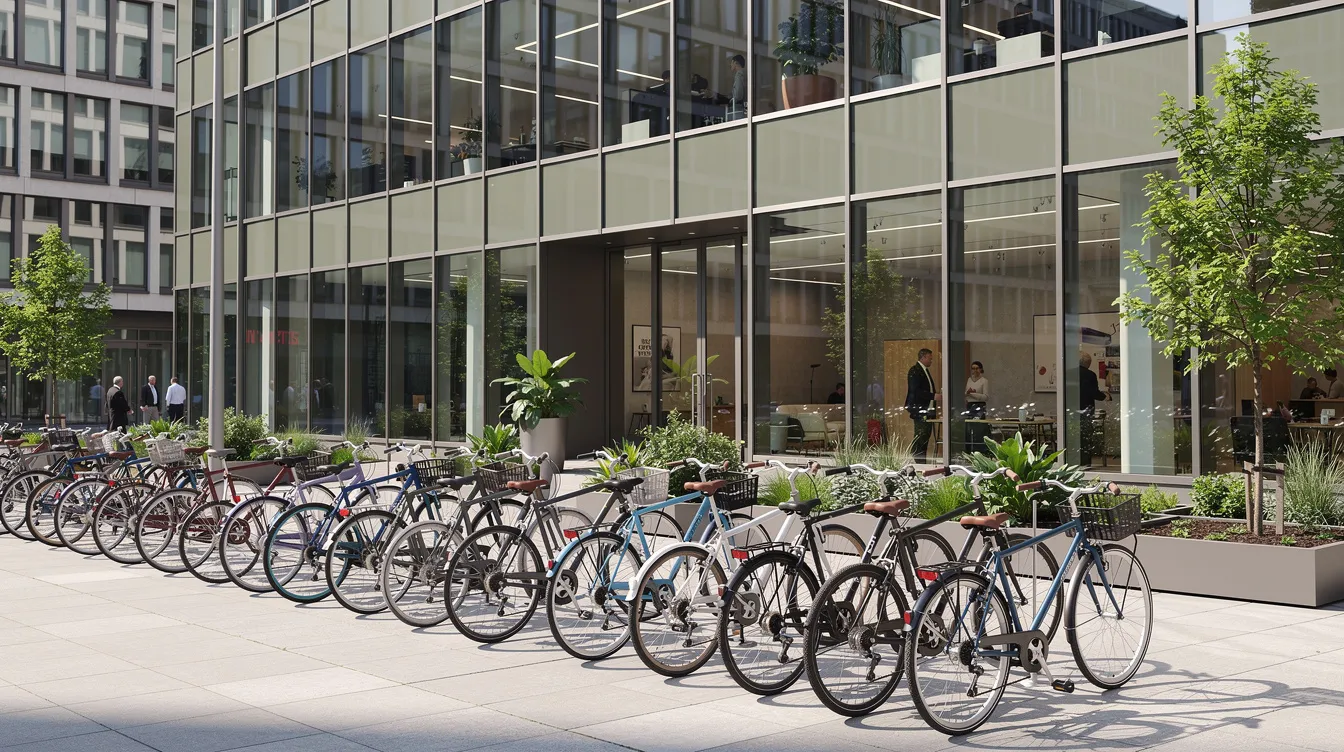
- Soft mobility week (cycling, running, walking)
- “Zero cup” challenge or waste reduction
- Sorting and recycling challenge by department
Taking part in eco-responsible challenges helps employees become aware of their role in protecting the environment and biodiversity, and to adopt sustainable behaviours, in line with innovative corporate sustainable development initiatives. A concrete example: one company saved 12 tonnes of CO2 in a quarter thanks to a soft mobility challenge.
CSR challenges enable teams to come together around initiatives that benefit the planet and natural resources, strengthening their sense of pride and belonging, in the same spirit as a CSR team-building focused on measurable impact. Link the results to donations to environmental organisations to amplify the impact and give meaning to the collective effort.
How to design an effective company challenge
Planning is the key to a successful company challenge, as it allows you to define the essential steps, structure communication, and measure impact using internal communication KPIs, ensuring that everyone remains aligned with the objectives. Here is the logical sequence to follow.
Define clear, aligned objectives
To organize a challenge effectively, it is crucial to set clear objectives using the SMART method: specific, measurable, achievable, realistic, and time-bound.
Examples:
- “Increase participation in QWL surveys by 20% by December 2026,” by rethinking how to make QWL questionnaires more engaging
- “Reduce solo car trips by 10% over 3 months”
Add qualitative indicators: social climate, quality of interactions, sense of recognition. Communicate these objectives from the outset to foster buy-in.
Choose the right challenge format
Analyze your teams’ profiles, the context (on-site, hybrid, distributed workforce) and budget constraints.
Typical scenarios:
- SME with 80 employees on a single site: in-person or hybrid format
- Multi-site group in France/Europe: digital format or dedicated app
Test a pilot with one department before a full rollout. Ensure accessibility: inclusive activities, appropriate levels, safety for all users.
Plan the rules of the game and the schedule
A good challenge is based on simple and fair rules. Specify:
- Exact duration (e.g.: 4 weeks)
- How points are counted
- Judging criteria
Typical timeline: launch in early September, weekly reminders, review and awards ceremony in mid-October 2026. Prepare a communication kit: emails, posters, intranet posts.
Motivate and engage participants on a daily basis
Gamification (badges, levels, leaderboards) boosts engagement without excessive pressure. 1 in 2 employees say they feel more motivated after taking part in an internal collaborative challenge.
Effective mechanisms:
- Highlight teams on the intranet page
- Ambassadors or “team captains” to drive engagement locally
- Real-time feedback via short surveys
Corporate challenges help strengthen employee engagement in a lasting way. Celebrate progress and participation, not just top results — that’s where the true team spirit lies.
Reward in a responsible and inspiring way
Rewards should be aligned with employees’ expectations and the company’s values, including bonuses, trips, gift cards and vouchers.
CSR-friendly ideas:
- Group experiences (workshops, outings)
- Donations to charities chosen by the teams
- Eco-responsible multi-brand gift cards
Reward performance, progress and involvement alike. Plan a symbolic award ceremony — an opportunity to celebrate together.

Measuring the impact of a corporate challenge
Once the challenge is over, it is important to assess its impact by tracking performance indicators such as participation rate and employee satisfaction.
Quantitative indicators:
- Participation rate and attendance
- Change in sales or number of appointments
- Kilometers in soft mobility, CO2 avoided
Qualitative indicators:
- Social climate via anonymous questionnaires
- Sense of belonging, feedback from managers
Share the results with all teams and draw lessons for the future. Studies show a return of €4 to €7 for every euro invested in a structured challenge.
Concrete examples of corporate challenges
Case 1 — SME, 150 employees, 6-week sports challenge: Objective: increase physical activity. Results: +25% activity, -18% perceived stress (internal surveys), tracked via an app.
Case 2 — Mid-cap company, quarterly soft mobility challenge: 35% of commutes by bike or on foot, 12 tons of CO2 saved, team morale up 30%.
Case 3 — Large company, post-merger rally: 250 participants, collaborative missions, 45% new connections formed between departments.
Case 4 — Multi-branch sales challenge: Real-time ranking, +18% qualified appointments, collective rewards appreciated by everyone.
Best practices and mistakes to avoid
Best practices:
- Co-construction with teams (90% buy-in)
- Simple and inclusive rules
- Clear communication from the initial project stage
- Connection with CSR and QWL issues
Mistakes to avoid:
- Unrealistic goals (50% dropout)
- Aggressive competition that harms the collaborative atmosphere
- Lack of follow-up or feedback
- No final recognition of the efforts made
Final tip: start small, measure the results, adjust, then gradually expand the scope of your challenges. This is the safest way to build a new company routine.
FAQ about corporate challenges
How long should a corporate challenge last?
The ideal duration is between 3 and 8 weeks according to behavioral science on habit formation. A single day or a weekend works well for one-off team-building formats. Beyond 2 months, plan key moments (midway milestones, small rewards) to avoid loss of momentum. A typical 4-week schedule includes a Monday launch, weekly reminders, and a celebratory closing.
What budget should you plan for a team challenge?
Count between €20 and €200 per employee depending on the format. The budget is split between facilitation (40%), tracking and communication tools, and rewards (30%). To reduce costs, use free apps, prioritise non-material rewards, or build local partnerships. Always compare the cost with the expected benefits in terms of engagement, savings on absenteeism, and employer branding.
How can you include remote workers in a company challenge?
Favour hybrid or 100% digital formats: step challenges, online quizzes, wellbeing workshops via video. Apps make it possible to include 90% of remote employees. If your group is international, adapt the schedule to different time zones. Challenges rebuild connections even between people who rarely see each other — a valuable innovation in today’s world of work.
How can you avoid the challenge being experienced as extra pressure?
Present the challenge as optional but encouraged, with no impact on performance reviews. Favour team-based cooperation rather than individual competition. Supportive management and recognition of effort — not just results — are essential. Co-designing the format with employees helps ensure it is seen as a driver of positive working life, not a constraint.
How can you integrate the environmental dimension into a company challenge?
Link each action to an indicator: kilometres of active or low-carbon mobility, kilograms of waste avoided, protection of resources. Solutions exist to turn a sports challenge into measurable CO2 savings. Share a clear summary at the end of the challenge and connect the results to an external environmental project (donation, sponsorship) to anchor the commitment in the real world.