Remote manager training: leading a remote team in 2026
Written by Tony Demeulemeester, Co-founder & COO @ Eli
May 6, 2026 · Updated September 9, 2026 · 10 min read
Ready to boost employee engagement?
Connect your employees to your culture and values. Create a workplace where everyone thrives.
Since 2020, remote work has become firmly established in the French professional landscape. In 2025–2026, 28% of employees work remotely at least part-time. For managers, this widespread adoption represents a major challenge: how can you maintain cohesion, performance, and engagement within a dispersed team? This remote management training provides concrete, practical answers through an innovative, continuous program delivered via the Eli platform.
Why should you take a “remote management” course now?
The boom in remote work in France since 2020 has transformed management practices. During the first lockdown, 40% of employees switched to working from home overnight. Five years later, hybrid teams have become the norm in many sectors: IT, services, consulting.
Companies now expect managers to be able to lead a remote team across multiple sites and time zones. According to the 2025 Remote Work Barometer, 65% of organizations face challenges with the performance of their remote managers. The result: turnover is 22% higher in poorly managed setups.
To address these challenges, this course offers a continuous learning path via Eli, an innovative digital platform for employee engagement that supports you on a daily basis with targeted questions, concise memos, and concrete actions. This method promotes long-term retention and the gradual integration of best practices, while adapting to your pace and specific needs thanks to artificial intelligence.
The benefits are measurable:
- Time savings of 15% to 20% thanks to streamlined rituals
- 18% reduction in turnover
- Stronger engagement from employees working remotely
Let’s imagine a concrete situation: you need to onboard a new employee who is 100% remote. Without a clear method, the onboarding process can fail. With the right tools and Eli’s personalized program, you can structure an effective virtual immersion from the very first week. Likewise, a remote conflict can be resolved through asynchronous channels such as Slack, using specific techniques.

Understanding the specific features of remote and hybrid management
Managing a remote team is not just about moving in-person practices onto Zoom. Remote management changes the working relationship, replacing control with trust and clarity. Training with Eli incorporates this transformation by offering content tailored to these new challenges.
The new challenges are real:
- Loss of subtle cues: studies estimate a loss of 40 to 60% of non-verbal signals in virtual contexts
- Isolation: 35% of remote workers say they feel lonely
- Overload of video meetings: the average manager spends 23 hours a week in video calls
- Difficulty in sharing a common vision
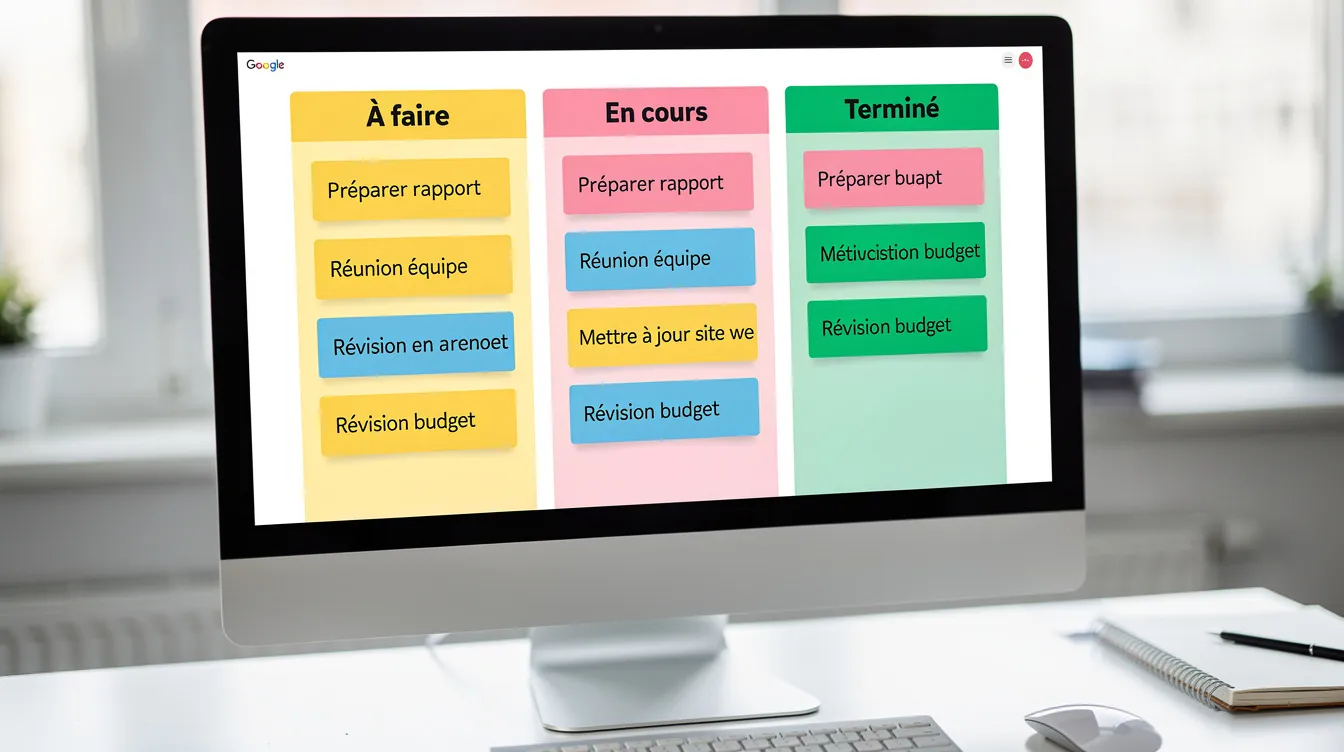
The way of working directly influences the organization. In fully remote management, everything relies on asynchronous work. In hybrid setups, office and remote rituals alternate. For multi-site teams, you navigate between time zones using shared Kanban boards.
Take the example of a team spread across Paris, Lyon and Lille, with 3 days of remote work per week. The manager must structure information, clarify everyone’s roles and adapt their leadership style depending on the context. The training offers personalized support to help with these adjustments.
Objectives and positioning of this remote management training
This training is aimed at current managers, future managers, project leaders and department heads. It is designed for people who are already working and want to professionalize their practice, especially those who want to become engaging team managers in the era of remote work.
The objectives are clear:
- Know how to manage a remote team effectively
- Drive performance without constant monitoring
- Maintain cohesion despite the distance by relying on best practices for team cohesion
- Build trust in a distributed environment
Remote management training helps develop essential skills such as project management, team management and digital communication, which align with the key skills of a high-performing operational manager. At the end of the program, participants know how to run remote rituals, conduct one-to-one meetings via video and set SMART goals adapted to remote work.
The positioning is pragmatic: 100% online training, action-oriented, compatible with a full-time professional activity. The 8- to 12-week journey with Eli offers progressive, flexible and personalized learning, promoting the sustainable integration of skills.
Key skills for managing a remote team
The remote management course targets a very operational skill set. To effectively manage a remote team, it is essential to adapt your management style to the team’s level of autonomy.
The main skill areas covered:
- Digital communication: mastery of asynchronous tools (Teams, Slack)
- Performance management: OKRs, dashboards, shared indicators
- Remote team facilitation: virtual team-building, gamification
- Time and priority management: prioritization grids, focus
Developing leadership based on trust, autonomy and accountability is the common thread. The hybrid model requires tailored rituals: daily, weekly, monthly retrospectives.
The Eli platform supports this skills development by offering content tailored to each stage, with concrete actions that can be implemented immediately.

Communication and rituals for remote teams
It is essential to organize regular team meetings and one-to-one sessions to maintain social connection at a distance. Remote managers must know how to run virtual meetings effectively to maintain team engagement and cohesion.
The training teaches how to structure video meetings:
- Agenda shared in advance
- Limited duration (30–45 minutes maximum)
- Timed speaking turns
- Documented and shared decisions
Assertive and digital communication requires choosing the right tools and adapting your message to avoid misunderstandings. For a quick exchange, use Slack. For an important decision, choose video. For formal information, email is still relevant.
Here is an example of a typical weekly schedule for a remote team:
- Monday: 15-minute daily sync via videoconference to quickly review priorities.
- Wednesday: 45-minute team huddle via videoconference to go deeper into topics and share progress.
- Friday: 30-minute asynchronous retrospective, done via a Loom video or a written report, to review the week.
One-to-ones are held every two weeks, in a 30- to 45-minute format by phone or video. This regular meeting maintains closeness despite the lack of commuting time together.
Managing performance in remote leadership
Shifting from time-based control to results-based management transforms the manager’s role. The SMART method helps define clear outcomes and thus fosters team autonomy.
To define shared and visible objectives:
- Use dashboards accessible to everyone
- Set up a digital Kanban board (Trello, Asana, Notion)
- Organize monthly performance reviews with structured feedback
The DESC method (Describe, Express, Suggest, Conclude) structures constructive feedback without creating tension.
Example of OKR for a remote customer service team:
- Objective: improve responsiveness
- Key result: 95% of response times under 2 hours
- Tracked in Asana with a weekly report
For a distributed IT project, the OKR could aim for a 20% increase in velocity on milestones, measured via a shared board.
Remote leadership, trust and motivation
The manager’s role is evolving: they become a framework creator rather than a permanent controller. The training transforms control-based management into facilitation-based management, ensuring sustainable performance when working remotely.
Good practices for building trust:
- Full transparency on decisions and the reasons behind them
- Explicitly recognized right to make mistakes
- Clear, jointly developed operating rules
Developing a manager-coach posture is important to detect signs of disengagement or stress at a distance. Isolation and burnout are a real risk: 25% of remote workers show signs of exhaustion according to DARES 2025.
To maintain motivation without physical presence:
- Send recognition messages via a Kudos channel in Slack
- Organize informal virtual coffee chats
- Celebrate team successes during weekly meetings
Detailed program of the remote manager training
The remote manager training is based on the Eli platform, which offers a continuous and personalized learning path over 8 to 12 weeks. This innovative system combines theoretical input, concrete actions, and daily reminders to support a gradual and lasting integration of skills.
The Eli program is structured around short, targeted sequences that combine videos, quizzes, role-playing scenarios, and discussions with an expert trainer. Each participant benefits from individualized support through personalized notifications that guide their learning according to their needs and pace.
The content covers the key topics of remote management: digital communication, facilitation of virtual teams, performance management, conflict management, remote motivation, organization of rituals, and management of distributed projects. For each topic, Eli provides practical tools, summary sheets, and exercises that can be applied immediately.
Monitoring via Eli also includes regular assessments in the form of self-tests and role-playing scenarios, making it possible to measure progress and adjust the program. At the end of the training, a personalized action plan is developed to consolidate what has been learned and facilitate implementation in the professional context.
This continuous and flexible approach enables managers to balance training with their professional activity, while benefiting from dynamic learning adapted to the realities of hybrid work.
Content and teaching methods
The content offered by Eli covers the fundamentals of remote management, with a focus on appropriate leadership approaches, the legal framework, organizational best practices, and essential digital tools (Teams, Slack, Trello).
Learning is interactive and varied: short videos, written summaries, quizzes, practical sheets and real-life role plays. The platform encourages engagement through daily reminders, peer exchanges and personalized support from a trainer.
Practical implementation and professional application
Training with Eli focuses on immediate action. Participants are encouraged to apply each concept in their work environment, with practical exercises such as:
- Organizing an effective virtual meeting
- Managing a remote conflict
- Setting up suitable team rituals
- Designing SMART objectives for remote work
These concrete scenarios make it easier to turn skills into operational behaviours.
Flexibility and course organization
Thanks to Eli, each manager can progress at their own pace, according to their availability. The course adapts to professional and personal constraints, with 24/7 access to content and ongoing support.
An example of a typical week could include:
- Watching short videos and doing quizzes on Monday
- Putting things into practice in the field on Tuesday and Wednesday
- Taking part in a virtual class or talking with the trainer on Thursday
- Personal reflection and summary on Friday
This organization supports gradual skills development without overload.
The remote management training via Eli is designed to integrate naturally into the manager’s daily routine, providing them with concrete tools and tailored support to succeed in a hybrid and distributed context, relying on Eli’s employee engagement management platform.
The long-term benefits of remote management training
This training goes beyond tools: it brings lasting change to managerial practices. Remote management training helps develop remote leadership, including employee motivation and engagement.
Benefits for the manager:
- Greater peace of mind (20% reduction in stress according to some studies)
- Ability to manage teams distributed across multiple sites
- Career progression towards roles with broader responsibilities
The benefits for the company are just as tangible: a 15% reduction in absenteeism, better talent retention, and increased productivity for remote teams.
Potential career paths include: remote team leader, shared services center manager, international project manager. The stakes are clear: training now means securing your professional future.
Career prospects and compensation
Remote management skills are increasingly valued on the French job market. The widespread adoption of hybrid work is reinforcing this trend.
Indicative salary ranges (France, 2026):
- Junior manager: €35,000 to €45,000 gross per year
- Experienced manager: €50,000 to €70,000
- Senior profiles: above €80,000 depending on the sector (IT/digital bonuses of 15 to 20%)
Mastering remote management opens access to positions in digital, IT, services, customer relations, and international organizations. This training is a concrete lever for negotiating a role change or a salary increase.
Career benefits in summary:
- Rare and highly sought-after skill
- Transferable across sectors
- Aligned with the favorable balance of power for trained candidates
- Valued in recruitment decision-making
Conclusion: turning remote management into a performance lever
Remote work and hybrid management will continue to grow beyond 2026. According to projections, 80% of companies will have adopted a hybrid model by 2030.
This remote manager training is built on three pillars: structuring the organization, communicating with the right rituals, and sustainably engaging employees. These foundations transform the daily work of the manager and their remote team.
The Eli platform, with its digital toolbox, offers personalized and continuous support, making it easier to integrate best practices without overload. As you will have understood, professionalizing your remote management is no longer an option, it is a necessity. Take action now to secure the future of your team and your own professional development.