What CSR budget should you plan for your company in 2026?
Written by Tony Demeulemeester, Co-founder & COO @ Eli
February 20, 2026 · Updated October 1, 2026 · 12 min read
Ready to engage your teams?
Create custom challenges that connect employees to your mission and drive real behavioral change.
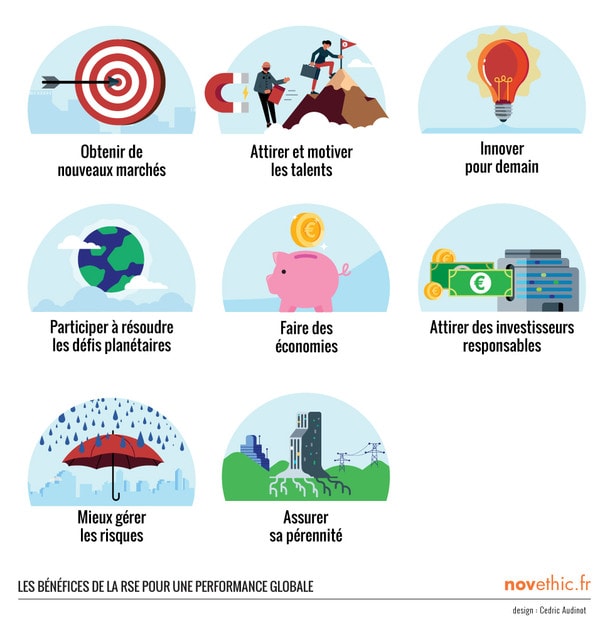
The benefits of a CSR strategy
Some key figures
Are you aiming to implement social and environmental measures in your company? Then you’re in the right place: today we’ll talk about CSR strategy and, above all, the budget to allocate to the different initiatives.
The national perception barometer from MEDEF highlights the importance of Corporate Social Responsibility; here are a few figures:
- 83% of employees say they enjoy working for their company when it has a CSR strategy.
- 51% of people refuse to work for an organisation that does not have strong social or environmental commitments.
- More than 70% of French people choose to buy (or boycott) a brand based on its stance on social and environmental issues.
Employee engagement in the CSR approach is crucial: their involvement gives meaning to the company’s activity, fosters a positive impact on society and strengthens the credibility of the actions carried out.
And as a bonus: the University of Oxford shows that more than 80% of traditional investors now take ESG criteria and sustainability into account in their decision-making processes. Finally, according to a Viavoice study, consideration of employee well-being within the company ranks first (51%) among the priority CSR issues. To find out more about this topic, head over to our blog post: integrate strong QWL practices in your company !
The benefits of Corporate Social Responsibility
Stakeholders (customers, suppliers, partners, etc.) are increasingly demanding when it comes to companies’ social and environmental commitments.
Committing your organisation to CSR allows you to address current challenges while also building a strong company culture by engaging your teams on these topics. Integrating sustainable development into your CSR strategy helps you meet stakeholder expectations and improve your company’s reputation. With our solution Eli, we support you in this journey by helping you accelerate your CSR objectives. Thanks to our tool, your teams can carry out concrete actions linked to your various goals. You can track performance in real time! If you’d like to book a demo, feel free to contact us.
There are many benefits; here are just a few:
- Environmental impact: whether through recycling, reducing energy consumption or supporting sustainable mobility… Many actions are possible! To maximise your impact, you can identify the key issues within your organisation and build your CSR strategy around the areas to be addressed, such as environmental, social and economic topics.
- Competitive advantage: your company will stand out from the competition and more easily attract new talent, partners, customers and potential investors. Good working conditions are a key lever for attracting and retaining talent.
- Improve performance and reduce costs: according to a study by France Stratégie, a CSR strategy increases company performance by an average of 13%. And to reduce your costs, you can, for example, cut electricity, water and overall energy consumption. CSR should be seen as a strategic lever to improve the company’s overall performance.
- Well-being at work: this helps improve team performance and reduce stress and workplace risks.
To maximise the impact of your CSR budget, it is recommended to adopt a structured approach in order to prioritise investments and allocate resources efficiently according to urgency, materiality and the overall performance you are aiming for.
Key steps
1 – Carry out your carbon footprint assessment and a CSR audit, either with an external consultant or an in-house expert.
2 – Appoint a CSR manager as well as “leader” team members to support your project, and involve your teams in it.
3 – Engage and train your teams on CSR: with Eli, through training courses, events and conferences.
4 – Define a budget: some projects are more expensive than others, which is why a budget must be set in advance.
5 – Define an action plan: focus on the pillars that have the greatest impact on your company. You can list your objectives, prioritise them, add relevant indicators and then set up monitoring. (For example, for the environmental pillar, you can implement waste recycling and reduce energy consumption; for the social pillar, you can offer remote work and organise team events; and for the economic pillar, you can support local projects and apply a responsible purchasing policy.)
6 – Communicate about your CSR actions: internally, to raise awareness among your teams, and externally, to show your stakeholders your environmental and social objectives.
7 – Finally, launch your CSR action plan and set up a shared dashboard to assess performance and adjust it if necessary. So, what are you waiting for to get started?
Ecological transition and carbon footprint: a key line in the CSR budget
In today’s context, the ecological transition has become a central issue for any company wishing to strengthen its social responsibility and meet the growing expectations of its stakeholders. Implementing an effective CSR approach inevitably involves taking environmental impact into account, which is reflected concretely in the company’s budget through dedicated lines for the ecological transition and carbon footprint assessment.
The carbon footprint assessment, a true tool for measuring greenhouse gas emissions, helps identify the main levers for reducing environmental impact. Allocating resources to this process means investing in the company’s future: this can translate into decarbonising activities, eco-designing products, reducing waste or adopting innovative solutions such as renewable energy, improving the energy efficiency of buildings or developing clean transport.
Recommendations from France Stratégie and the European Commission stress the importance for companies of moving towards carbon neutrality and integrating sustainability at the heart of their strategy. This requires an appropriate budget allocation, but also strong involvement from top management in decision-making and in defining objectives. The success of a CSR approach also depends on the commitment of employees, customers and suppliers, who must be involved at every stage of the project.
Investing in the ecological transition offers many advantages: long-term cost reduction, improved reputation, market differentiation and anticipation of regulatory constraints. Companies that make social responsibility a core pillar of their strategy are better equipped to meet stakeholder expectations and strengthen their overall performance.
To support this transition, CSR software plays a key role. It enables companies to collect, analyse and track environmental data, making it easier to implement effective action plans and measure progress. It is important to choose solutions that are tailored to the company’s needs and compliant with international standards such as ISO 26000, in order to guarantee the reliability of indicators and the credibility of the approach.
In short, the ecological transition and carbon footprint assessment are essential components of the CSR budget. Including them in the company’s overall strategy, with clear objectives and performance indicators, is crucial to successfully managing the transition, reducing environmental impact and strengthening the organisation’s sustainability. With appropriate resource allocation and the use of effective tools, companies can turn these challenges into real drivers of performance and engagement.
What CSR budget should you plan?
Planning a CSR budget
Committing to CSR initiatives requires human resources and time: this involves steering and buy-in from team members, mobilising internal teams around these topics, and potentially calling on external consultants or tools.
But to have a real impact, you also need financial resources. Indeed, if there is one essential step in implementing your strategy, it is creating a budget framework. This step can be daunting, as a cost that seems too high compared to the company’s means is sometimes used as an argument to “justify doing nothing”. It is essential to anticipate expenses related to regulatory compliance in the CSR budget, as they often represent a mandatory and strategic line item. In addition, regulatory and societal pressure is forcing companies to rethink how they allocate their CSR budget in order to meet the growing expectations of stakeholders.
“1 in 3 companies has no budget dedicated to CSR, and 21% allocate less than €5,000 per year, according to Vendredi’s CSR barometer. But the same study notes that one-third of the companies surveyed have a budget of more than €20,000, and among them, 12% even have a budget of over €100,000.”
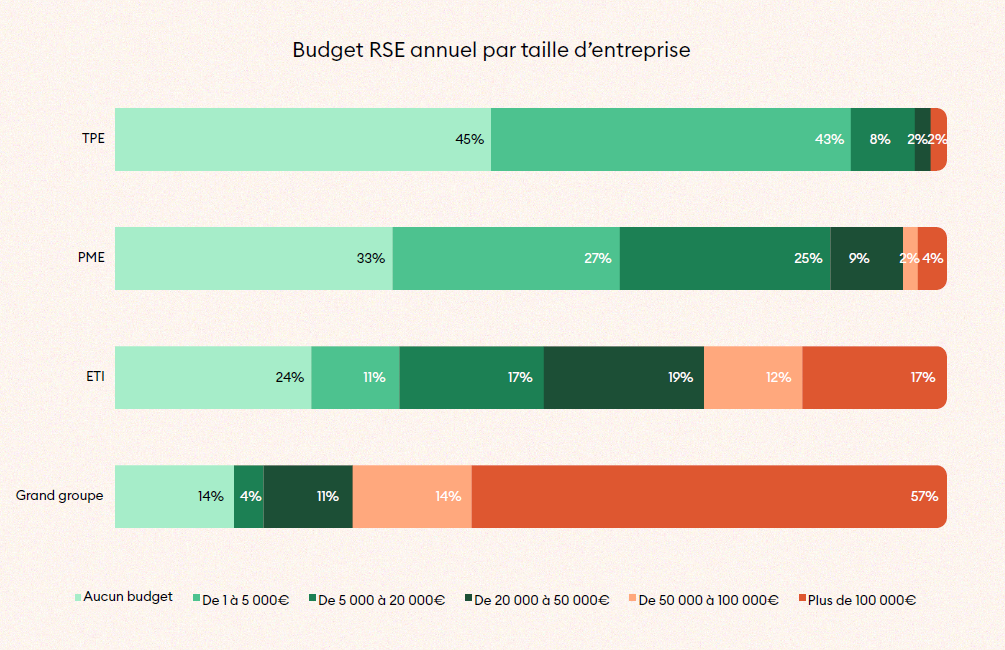
It is difficult to estimate the average cost of implementing CSR initiatives, as this depends on several criteria such as the type of company, its needs and the resources it already has in place (or not).
Implementing a CSR strategy in your company can be long and costly. If your budget is not sufficient for all the actions you would like to undertake, we recommend focusing only on the essentials that will have the greatest impact. But don’t worry, we’ve prepared a guide to help you define your budget!
Define your CSR budget
- Assess your resources and identify your objectives: to begin with, you need to draw up an inventory of all the resources (financial, human, material, time, etc.) you have and what you need to achieve your objectives. Then you should prioritise the projects that are the most impactful and relevant.
- Plan your CSR budget: once you have assessed your resources, you need to define and plan your budget (realistic and flexible, aligned with expected results) for your CSR strategy. To do this, assess the cost–benefit ratio of each action in relation to your objectives. You can estimate the potential impact of your action plan on your goals, then determine what financial resources must be allocated to achieve the desired outcome. Don’t forget that some regulatory obligations, such as compliance with environmental or social standards, may require specific budget adjustments.
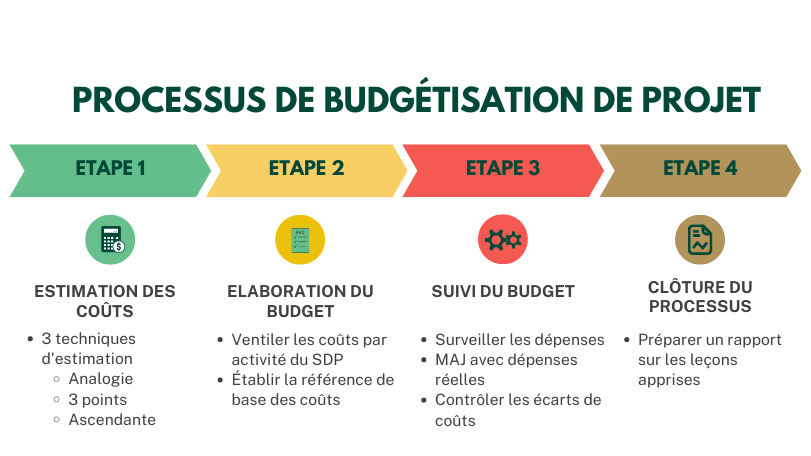
- Look for funding: depending on the size of your organisation and your project, you may need additional funds. There are many types of support available, such as grants, crowdfunding and others to help you through this process. Support schemes are also offered to help companies structure their CSR budget, particularly in certain regions such as Hauts-de-France, where local initiatives support the ecological transition and access to specific financing, including green or impact bonds.
- Communicate and involve your stakeholders and teams: you need to engage and mobilise your stakeholders from the outset to gain their buy-in and support. You should also share the results and achievements of your project with them.
- Evaluate your results and measure your return on investment: in short, this is a ratio that compares the benefits and costs of your project and helps you determine whether it is worth the investment. You need to use indicators to assess the performance, impact and value of your project for your company and your stakeholders.
- Finally, start taking action: identify what works and what doesn’t, and launch a small-scale initiative to demonstrate feasibility and potential benefits. To do this, set clear and measurable objectives (for example: reduce plastic waste by x% in x time, or increase the use of renewable energy by x%). Then track progress and share the results.
Once launched, what is the return on investment?
According to a study by France Stratégie, integrating a CSR approach into an organisation increases its performance by an average of 13%. The ISO 26000 standard can serve as a reference to structure the CSR approach and measure return on investment, by addressing seven specific areas of action to promote sustainable development.
However, it is important to remember that such an initiative is based on a long-term vision (typically 7 years) and covers several aspects (QWL/QVCT, environmental protection, cost reduction, etc.), which explains why it is difficult to obtain a precise, quantified return on investment. It is essential to take into account different dimensions—environmental, social and economic—to assess the overall impact of CSR. Ethical Corporation conducted a survey to find out whether companies committed to environmental and social issues were able to determine if this generated revenue. They asked around 2,500 CSR professionals, and only 54% of companies were able to state that their CSR strategy helped generate income. According to an article from civitime, “most executives agree on the need to measure the return on investment of their CSR approach, but the lack of indicators allowing comparisons between companies in the same sector often undermines any attempt at quantified evaluation. And indeed, to date, only half of business leaders calculate the return on investment of their CSR initiatives!”
Beyond reducing your costs, CSR can also help you create new revenue streams and open up new markets. For example, eco-designing products helps improve both the environmental and economic performance of the company while fostering innovation. In addition, green or impact bonds can be powerful financing levers for CSR projects, further strengthening the company’s environmental and social responsibility.
And to measure the real performance of your commitments, Social Return on Investment (SROI) enables you to measure and value the social impact created for a given investment amount (not limited to a financial dimension, as it includes the social, environmental and economic costs and benefits generated). The notion of value is therefore at the heart of SROI, and investors are increasingly interested in measuring the social impact of the organisations they support: it is more than just a number, as it provides full visibility over the impacts linked to companies’ investment decisions.

Conclusion
Implementing a CSR approach takes time and financial resources. If your CSR budget is limited, you can seek external support, but money is not everything. To act effectively, don’t forget about human resources: you need to involve your teams and bring them together around a project with social or environmental impact. The benefits of these initiatives create value for companies, teams and stakeholders alike.
So if you want to get started by engaging your teams in concrete projects, Eli can be part of your solution!