Working in a team: levers, tools and best practices for engaged teams
Written by Tony Demeulemeester, Co-founder & COO @ Eli
April 1, 2026 · Updated October 1, 2026 · 11 min read
Ready to boost employee engagement?
Connect your employees to your culture and values. Create a workplace where everyone thrives.
In 2026, teamwork is no longer just about sharing an open-plan office. With 78% of French companies with more than 200 employees operating in hybrid mode, coordination between colleagues now requires appropriate methods and tools. This guide gives you the keys to turning your teams into real performance drivers.
Key takeaways
- Teamwork in 2026 is inseparable from hybrid work: 60% of interactions are now digital, making tools like Teams, Slack or Eli essential.
- A team’s performance relies on three pillars: clear shared goals, continuous communication, and monitoring based on concrete indicators.
- A platform like Eli turns internal communication into measurable participation thanks to structured campaigns (newsletters, videos, quizzes) and team-based analytics.
- Soft skills (listening, respect, adaptability) account for 85% of a team’s success according to LinkedIn Workplace Learning 2025.
- This guide gives you a hands-on action plan to structure, energize, and measure your teams’ engagement.
Definition of teamwork in 2026
91% of French people value collaborative work according to a 2024 IFOP survey for Microsoft. The post-Covid context has profoundly transformed organizations: remote work rose from 15% to 45% between 2022 and 2025.
Teamwork refers to a group of people who coordinate their skills, knowledge, and decisions to achieve a common goal. In a hybrid, multi-site environment, this coordination involves shared responsibilities, mutual feedback, and shared objectives.
The difference from simply “working side by side” is fundamental: in a real team, everyone depends on others to succeed. Synergy creates a multiplier effect where 1+1=3 thanks to complementary profiles.
This notion of a team is directly linked to current HR challenges:
- Employer brand: engaged teams increase NPS by 20 points
- Well-being: 28% reduction in burnout thanks to mutual support
- Retention: 22% lower turnover in cohesive teams
This article is aimed at HR, internal communication, and CSR managers in companies with 200+ employees who are facing the loss of hybrid talent and want to structure their actions with an employee engagement platform.
Why develop teamwork? Benefits for the company and employees
The link between teamwork and business performance is established: collaborative teams generate 35% more patents according to BCG 2024, reduce errors by 27% and speed up timelines by 20%.
The main benefits of teamwork:
- Problem-solving: cognitive diversity doubles the number of viable solutions.
- Creativity: collective brainstorming generates 50% more innovative ideas.
- Knowledge sharing: 40% reduction in redundancies thanks to information exchange.
- Engagement: motivation increases by 31% according to Gallup 2025.
- Quality of work life: stress is reduced by 25% in collaborative teams.
- CSR alignment: improvement of the sustainability score by 15%, notably through engaging and measurable CSR team-building initiatives.
In 2024, a French industrial company reduced project delays by 20% thanks to daily team rituals (stand-ups, Kanban) and better coordination via Slack.
These benefits of collaborative work are amplified when internal communication is structured into measurable campaigns rather than ad hoc emails, supported by measuring the impact of internal communication and its KPIs. A platform like Eli makes it possible to reach a 65% open rate compared with 20% for traditional emails.

The fundamentals of an effective team
Despite the diversity of companies and professions, high-performing teams share common constants identified by research, notably Google’s Project Aristotle, which ranks psychological safety as the number one factor.
The 5 fundamentals:
- Shared objectives: weekly meetings to align priorities, reducing ambiguity by 50%
- Complementary profiles: mix of technical skills and soft skills
- Clear roles: fair distribution of tasks based on expertise
- Operating rules: charter with response times (24h), decision-making methods
- Trust: mutual feedback and recognition of contributions
The importance of soft skills should not be underestimated: listening, respect and adaptability account for 85% of success versus 15% for technical skills. Team spirit and mutual support are qualities that make the difference.
Aligning the team around clear shared objectives
In 2026, teams juggle between OKRs, KPIs, CSR projects and business targets. This multiplication of frameworks explains why 70% of project failures are due to unclear objectives according to PMI 2025.
The SMART method applied to the collective:
For an internal communications team in Q3 2026:
- Specific: Increase CSR engagement through 3 campaigns
- Measurable: Reach 80% participation
- Achievable: Use existing resources
- Relevant: Aligned with the ESG strategy
- Time-bound: Before the end of September
Practical benchmarks: a comprehensive communication plan approach helps articulate these objectives with the right messages, targets and channels.
- Limit to 3–5 objectives per quarter
- Make them visible (board, intranet, platform)
- Translate them into simple milestones and indicators
With a tool like Eli, objectives are broken down into content sequences (articles, videos, quizzes). The team tracks progress in real time: open rates (68% on average), survey responses (55%), actions completed.
Building a team: diversity, roles and ground rules
McKinsey’s Diversity Wins studies (2023–2026) confirm that diverse profiles boost innovation by 45% and retention by 30%. To turn this diversity into genuine long‑lasting, high‑performing team cohesion, differences between individuals must become an asset.
Balanced composition:
- Mix of analytical/creative profiles (50/50)
- Junior/senior ratio (1:2)
- Operational and strategic profiles
- Diversity of roles, ages, genders, backgrounds
Example of a RACI matrix for a 2025 remote‑work rollout:
Role and function within the team:
- Responsible: Project manager
- Accountable: HR Director
- Consulted: IT, field teams
- Informed: Executive management
Ground rules to define:
- Meeting frequency (2/week)
- Channels by use (Teams for operations, Slack for informal exchanges, Eli for campaigns)
- Right to disconnect (after 6 p.m.)
- Response time (24h)
- Decision‑making method (consensus/majority)
Formalize these elements in a short team charter hosted on your internal communication tool so that everyone can access it.
Day-to-day communication and collaboration
Communication is the engine of collaboration, especially when part of the team is working remotely. Implementing a structured internal communication strategy significantly reduces misunderstandings, which according to Buffer 2025 are still 60% linked to asynchronicity.
Concrete practices: when choosing tools, thinking about the best communication channels for the company in 2026 helps avoid fragmentation.
- Weekly check-ins (15-minute stand-up)
- Thematic channels by project
- Alignment rituals (daily scrum, retrospectives)
- Ongoing 360° feedback
Differentiation of channels:
- Instant messaging channel: used for fast operational communications.
- Video channel: preferred for decision-making and check-ins.
- Engagement platform: designed for structured campaigns and surveys.
Two-way communication is essential: the team doesn’t just receive information, it responds, votes, and makes suggestions. Quick polls increase buy-in by 40% according to Qualtrics.
Eli helps structure this communication at the organizational level with quizzes, questionnaires, and challenges targeted by group. Reach hits 85% in hybrid mode.
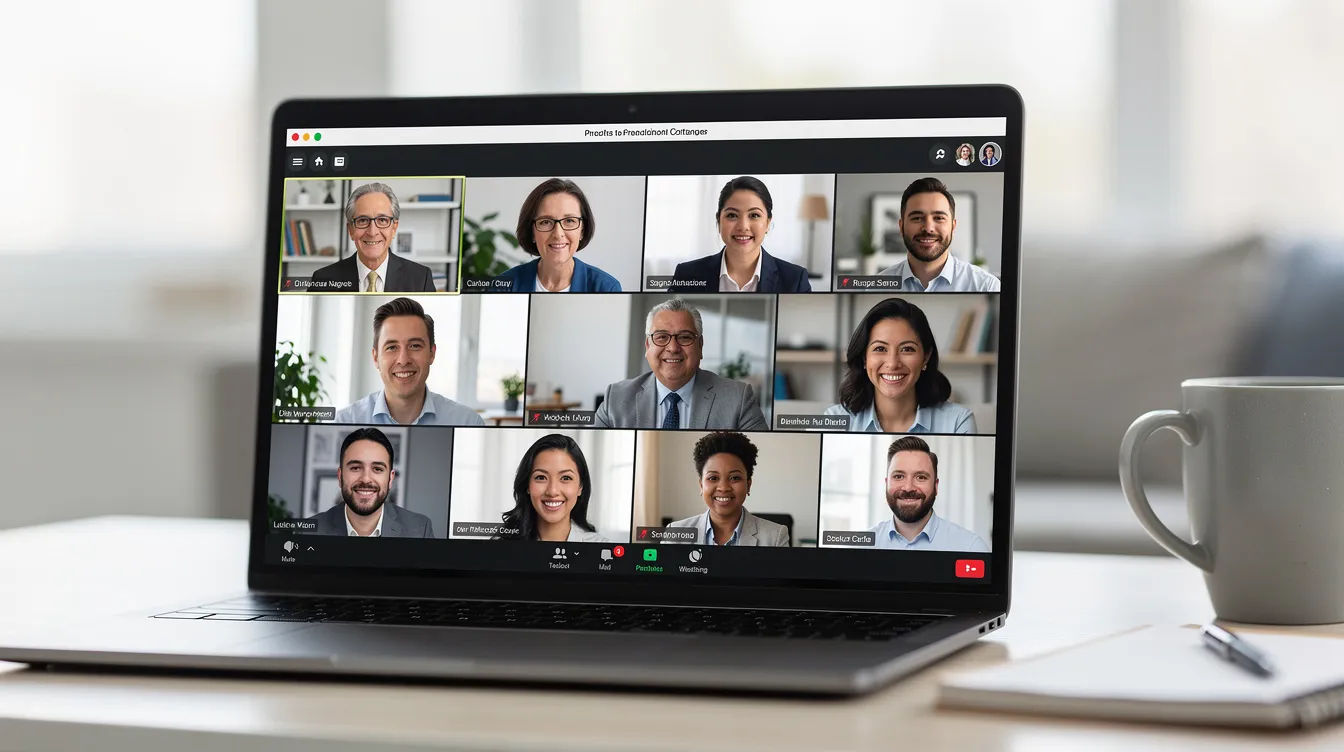
Collaboration tools and engagement platforms
95% of companies use Microsoft 365 or Google Workspace in 2026. These suites need to be complemented by specialized solutions.
The 3 tool families: including solutions that make it easy to launch engaging and structured corporate challenges.
- Communication: Teams, Slack (300M Teams users)
- Project management: Asana, Trello, Monday (+25% hybrid adoption)
- Internal engagement: Eli (measured campaigns, analytics)
Eli’s specific role:
- Content creation via AI (200+ templates)
- Campaign orchestration (4–6 weeks)
- Targeting by team, site, country
- Multichannel sending (email, push, in-app)
- Real-time analytics by population
Concrete example: 2025 Sustainable Mobility Week run via Eli (articles, video, distance challenge, quiz): 72% participation, 15% reduction in kilometers.
Selection criteria:
- SSO integration
- Multiple languages (FR/EN minimum)
- Mobile-first access
- Granular reporting by site/team
- Simple UX for non-technical users
Working in remote and hybrid teams
58% of French employees work remotely at least 1 day per week in 2025 according to DARES. Reported difficulties: isolation (40%), loss of connection (35%), misunderstandings (28%).
Hybrid best practices:
- “Remote-first” meetings (everyone on camera)
- Shared documents prepared before meetings
- Explicit attendance rules
- Equal access to mic/camera for everyone
Maintaining a sense of belonging:
- Informal virtual coffee breaks
- Team challenges via platform
- Well-being or QWL (quality of work life) campaigns
- Regular pulse surveys (+22% engagement)
Eli reaches on-site, branch-based and home-based employees equally through notifications, the app and emails, with detailed tracking by population.
Mini case 2024: A multi-site company used Eli to synchronize several remote teams around the rollout of a new remote work agreement. The campaign included an FAQ, comprehension quizzes and surveys. Result: +30% understanding of the new rules.
Managing a team: leadership, recognition and conflict management
The manager is both conductor and facilitator in transforming organizations. Their role is evolving towards more listening and transparency.
Behaviors of inclusive leadership:
- Active listening (+40% psychological safety)
- Transparent information sharing
- Encouraging initiative-taking
- Protecting everyone’s time
Recognizing efforts:
- Public congratulations in newsletters
- Badges and points systems (gamification +35% motivation)
- Peer testimonials
- Highlighting individual and collective achievements
Conflict management:
- Detect early warning signs (drop in participation)
- Create spaces for open discussion
- Mediation: listen separately, then focus on facts and objectives
- Refocus on the collective, not on individuals
A manager can use Eli to share recognition messages, launch targeted climate surveys, and track morale over time.
Measuring and managing team performance
What is not measured is hard to improve, as Deming reminded us. But beware of micromanagement: indicators should serve improvement, not surveillance.
3 types of indicators:
Types of indicators and examples:
- Results: business KPIs, project deliverables
- Operations: meeting deadlines, quality, cooperation
- Engagement: participation in rituals, responses to surveys
- Meeting attendance rate (target: 95%)
- Project progress (target: 90%)
- Internal NPS satisfaction score (target: 75)
- Survey response rate
- Campaign actions completed
Eli automatically provides campaign participation metrics by team, department, site, or country. Productivity and efficiency become visible.
Combine quantitative data (analytics) and qualitative data (interviews, retrospectives) to adjust your team dynamics every quarter. The ability to adapt remains key.
Using Eli to facilitate and engage your teams
Here’s how an HR or communications manager can rely on Eli to structure teamwork within the organization.
3 typical campaign use cases:
- Content: video tutorials, FAQ, validation quizzes
- Pace: 4 weeks
- Channels: email + app + notifications
- Metrics: 80% completion, quiz scores
2. 2026 wellbeing program
- Content: advice articles, weekly challenges, mood surveys
- Pace: 6 weeks
- Channels: multi-channel, targeted by site
- Indicators: 70% participation, satisfaction
3. CSR campaign on waste reduction
- Content: awareness video, quiz, actions to carry out
- Pace: 4 weeks
- Channels: priority push
- Indicators: 65% participation, tracked actions
The Eli content editor with AI and a library of 200+ templates makes it possible to quickly produce materials adapted to local teams and different languages.
Ready to transform your teams’ engagement? Request a free demo to see concretely how to energize your teams with Eli.
FAQ about teamwork
How can you introduce a new way of working as a team without resistance?
Start by explaining the “why”: performance gains, better quality of life. Involve a pilot group to co-design a few simple rules and communicate the first successes. Transparency and feedback loops (anonymous surveys, open meetings) reduce fear of change.
Use an internal campaign on Eli to explain the project, answer frequently asked questions, and measure buy-in in real time. Favour a gradual rollout with reviews every 2–3 months rather than a sudden transformation.
What concrete practices can strengthen team cohesion when working remotely?
Four approaches work well: regular rituals (short daily/weekly meetings), informal moments (virtual coffees), online team-building activities (quizzes, challenges), and transparency about priorities.
For example, a 30-day wellbeing challenge run via Eli (step tracking, mini health quizzes, sharing tips) showed a 32% increase in cohesion. Combine group video calls and one-to-one meetings. Favour short but regular rituals so as not to overload people’s schedules.
How do you handle a conflict that is blocking teamwork?
Follow 4 steps: set the framework (respect, listening), listen to each party separately, bring them together to clarify facts and impacts, and co-create an exit plan with mutual commitments.
Focus on observable behaviours and shared objectives, not on individuals. If the situation is too tense, call on a neutral third party (HR, mediator). Ensure follow-up with checkpoints and role adjustments if necessary.
How can you concretely measure team engagement?
Three simple indicators: participation in meetings and projects, contributions to discussions (ideas, comments), and engagement survey results.
Short, frequent surveys (pulse surveys) provide a more detailed view than an annual survey. Eli lets you launch these surveys by team and quickly visualise gaps between departments. Always link measurement to a communicated action plan to avoid a “black box” effect.
Where should I start to improve teamwork in my company?
A 4-step approach: choose a pilot team, jointly clarify 2–3 key objectives, define a few rituals and ground rules, select the necessary tools.
Document this test (successes, mistakes, best practices) so that it can be replicated with other teams. Launch a first mini-campaign on Eli to support this pilot: presentation of the objectives, tutorials, initial survey, retrospective.
Success lies in simplicity: it is better to start small, measure, and improve than to aim for a global transformation of the whole world in one go. Innovation in ways of working comes from small successful steps.