Corporate CSR challenge: the complete kit to launch and manage your initiatives
Written by Tony Demeulemeester, Co-founder & COO @ Eli
March 2, 2026 · Updated October 1, 2026 · 16 min read
Ready to engage your teams?
Create custom challenges that connect employees to your mission and drive real behavioral change.
Engaging your employees around sustainable development is no longer limited to an annual green day or a one-off sports challenge. In 2026, an effective CSR challenge combines awareness-raising content, concrete actions, gamification, and impact tracking within a structured campaign approach. This guide gives you the keys to design, roll out, and measure a CSR challenge that truly transforms practices within your organization.
Key takeaways
Before diving into the details, here are the main ideas to remember:
- A CSR challenge is not just about sports: it relies on educational content, daily micro-actions, and a game dynamic to embed new sustainable habits
- A “campaign” approach (2 to 4 structured weeks) outperforms one-off events in terms of engagement and measurable impact
- Gamification is a powerful lever: studies show up to +25% employee engagement through points, badges, and leaderboard mechanics
- Managing through KPIs makes it possible to demonstrate impact to the Executive Committee and feed into the non-financial report (CSRD, labels)
This toolkit is intended for CSR, HR, and internal communications managers in French companies, including those operating internationally with hybrid teams. You will walk away with challenge ideas, a sample 6-week schedule, key indicators to track, and an internal communication playbook.
What is a CSR challenge today?
A modern CSR challenge goes far beyond a simple charity sports event. It is a structured 2- to 8-week campaign that combines several dimensions to create awareness and a lasting change in behaviour.
Here is what characterizes a real CSR challenge:
- Educational content: articles, short videos, and quizzes to convey essential information on environmental and social issues
- Concrete micro-actions: daily or weekly missions that every team member can complete (turning off lights, sorting waste, choosing cycling over driving)
- Engaging gamification: a system of points, badges, individual and team leaderboards to keep motivation high throughout the journey
- Impact measurement: real-time tracking of participation and concrete results (kg of CO₂ avoided, kWh saved)
This framework is in line with ISO 26000, which structures social responsibility around seven pillars: governance, human rights, labour relations, environment, fair operating practices, consumer issues, and local communities.
The fundamental difference between a one-off event (a green day, an annual collection) and a CSR challenge lies in the duration and depth of involvement. A challenge establishes new habits in employees’ daily lives rather than creating a short-lived engagement spike.
The inclusive dimension is also central: a successful CSR challenge reaches field teams, support functions, remote workers, and international sites. This requires multilingual accessibility and adaptation to different time zones.
The “digital CSR challenge” format is becoming the norm: an app or online platform allows each employee to track their points, view rankings, access content, and validate completed actions, wherever they are.

Why launch a CSR challenge in 2026? Key issues and business benefits
The regulatory context and stakeholder expectations make CSR challenges more relevant than ever. Here are the reasons to take action.
Regulatory issues and labels
- The CSRD (Corporate Sustainability Reporting Directive) came into force from 2024 for large companies, expanding non-financial reporting obligations
- The 2019 Pacte law requires all French companies to take social and environmental issues into account in their management
- Labels (ISO 14001, B Corp, Lucie) require concrete proof of employee engagement
- CSR teams must reach all employees in order to meet these requirements
Human benefits
- Increased engagement: employees involved in CSR initiatives develop a sense of purpose and pride in belonging
- Stronger team cohesion thanks to collective challenges that create connections across departments and sites
- Improved well-being at work and lower turnover (studies show a 10–15% reduction in absenteeism)
- Better quality of work life and greater involvement of teams in company life
Environmental and societal benefits
To go further, you can also explore innovative initiatives that combine business and sustainable development and enrich your overall CSR strategy.
- Measurable reduction of the carbon footprint through everyday eco-actions (mobility, energy, digital)
- Quantifiable reduction of waste at sites
- Volunteer hours and direct contribution to local non-profit organisations (social and solidarity economy)
- Targeted donations to solidarity partners chosen by the teams
Impact on employer branding
- 90% of millennials consider CSR a key criterion when choosing an employer
- Meeting the expectations of Generation Z candidates who are looking for meaning
- Support for recruitment campaigns and talent retention
- Differentiation from competitors in a tight labour market
Direct business benefits
- Improved operational performance: energy efficiency, optimised travel, reduced waste
- The ADEME carbon footprint assessment often identifies 20 to 30% potential savings on energy
- Greater appeal to clients and partners who are sensitive to ethical issues
- Anticipation of regulatory risks and avoidance of greenwashing
Building an effective CSR challenge: the 5 key steps
Setting up a CSR challenge requires a structured approach. Here are the five essential steps to make your project a success.
Step 1 – Clarify the objectives
Start by choosing 1 to 3 priorities aligned with your overall CSR strategy. For example: sustainable mobility for 2026, energy sobriety for the winter, or responsible digital technology in line with your Green IT policy. Define a clear target: all employees, a pilot site, a specific country. This initial clarification will guide all your subsequent decisions and give meaning to the entire initiative.
Step 2 – Map your stakeholders
Identify the key players for your challenge: an executive-level sponsor to legitimize the initiative, a cross-functional project team (CSR, HR, communications, IT), local ambassadors at each site or in each country, and manager relays to cascade information. This mapping ensures anchoring at every level of the organization and facilitates the achievement of objectives.
Step 3 – Define KPIs from the outset
To structure this approach, rely on a rigorous selection of the best CSR KPIs to track in order to align your indicators with your overall strategy.
Do not launch a challenge without knowing how you will measure its success. Typical indicators include:
- Participation rate (target: at least 70% of the employees concerned)
- Activation rate (registered vs. actually active participants)
- Average number of actions per person (target: 5 to 10 for a 4‑week challenge)
- Completion of content journeys (quizzes, videos, articles)
- Impact indicators: kWh saved, kg of waste avoided, km of soft mobility, hours of volunteering
Step 4 – Choose the campaign format
The optimal duration is between 2 and 4 weeks. Structure your challenge with one theme per week, accessible daily missions, and team challenges to create a collective dynamic. Plan different difficulty levels (easy, intermediate, expert) to include all profiles, from beginners to the most committed.
Step 5 – Select your tools
For a small scope (fewer than 50 people), an Excel spreadsheet combined with emails may be enough. Beyond that, a specialized platform like Eli becomes essential to manage content, country- or language-targeted notifications, gamification, and consolidated multi-site reporting. The opportunity to automate these tasks frees up time for human facilitation.
Concrete CSR challenge ideas beyond sports
Here is a series of challenge ideas organized by theme, each with concrete actions and simple indicators. These initiatives can be aligned with key moments: Sustainable Development Week, European Mobility Week, Pink October, Waste Reduction Week.
For an inclusion theme, Disability Week (SEEPH, November 16-22, 2026) is the perfect moment to launch a team challenge.
Theme “Sustainable mobility”
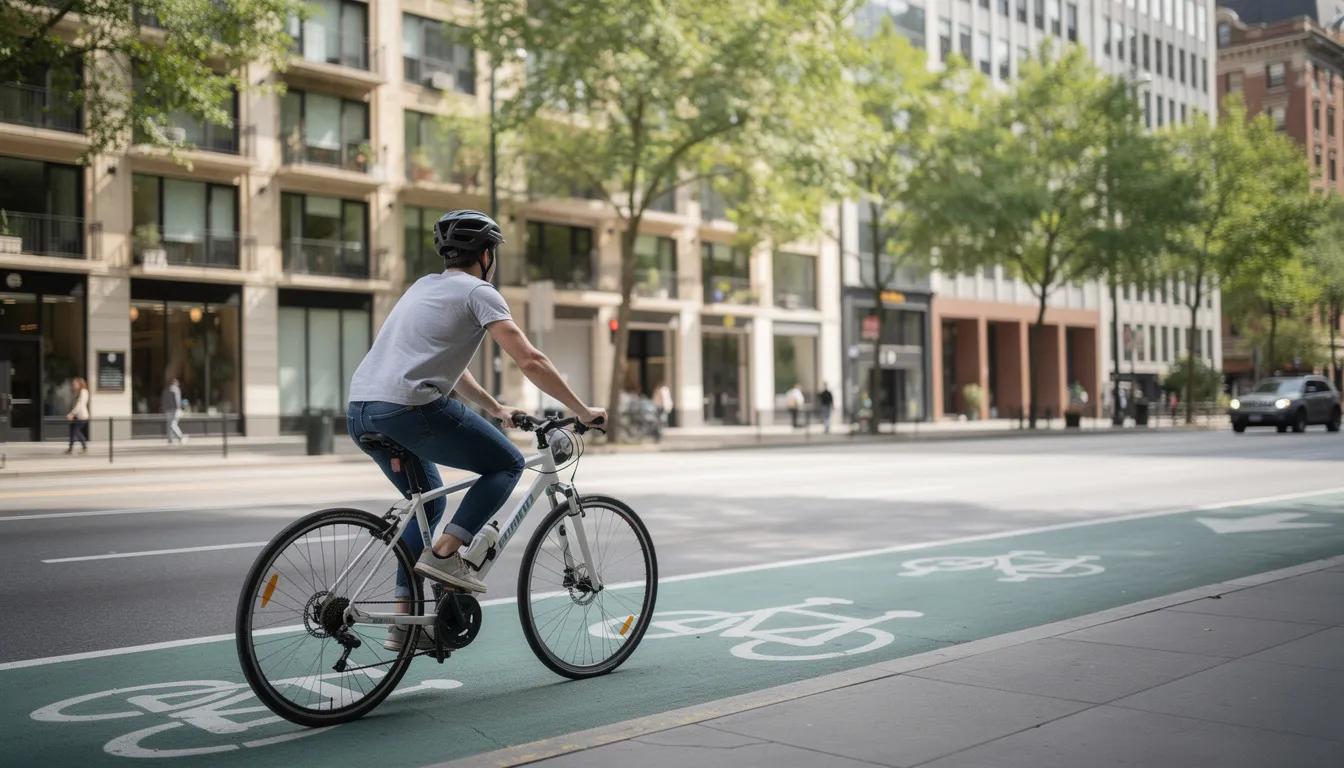
- “30 days without solo driving” challenge: prioritize carpooling, public transport, cycling, or walking. Use ADEME’s “Mon Impact Transport” tool to quantify the kg of CO₂ avoided.
- Interactive commute map: collectively visualize home–work travel modes and highlight best practices.
- Inter-site challenge: competition between sites on the number of kilometers traveled using soft mobility. Closing date with announcement of results and rewards.
Theme “Responsible digital use”
- Decluttered inbox challenge: delete unnecessary emails, unsubscribe from unread newsletters, empty the trash.
- 3 eco-digital actions per day: switch off the screen during breaks, limit large attachments, prefer links over files.
- Mini awareness pathway: content on the carbon footprint of the cloud, videoconferencing, and devices. Validation quiz with points to earn.
Theme “Inclusion & diversity”
- Micro-content pathway on cognitive biases: short videos + quizzes to raise awareness of unconscious discrimination.
- “1 inclusive action per week” challenge: inclusive language, cross-feedback, co-opting diverse profiles.
- Sharing internal testimonials: give employees a voice to share their journeys, build connections, and inspire change.
Theme “Solidarity & social engagement”
- Skills-based volunteering week: offering your skills to a partner association
- Giving month: collection in support of local associations, team challenges to collect volunteer hours
- Donation of paid leave days: solidarity initiative for colleagues who are caregivers or in difficulty
Theme “Food & sustainable health”
- Sustainable menu challenge: sharing vegetarian or local recipes, cooking together during virtual workshops
- Anti-waste lunch box contest: photos of meals, community voting, an opportunity to raise awareness about food waste
- Workshops with experts: nutritionist via video call, association fighting against food waste
Theme “Energy & efficiency”
- Energy efficiency week: systematic switching off, optimal heating/air conditioning settings, screen optimisation
- Participatory audit: each team identifies sources of waste in its workspace
- Mini eco-actions pathway: awareness-raising on effective actions at home and at work, with quiz questions to validate learning
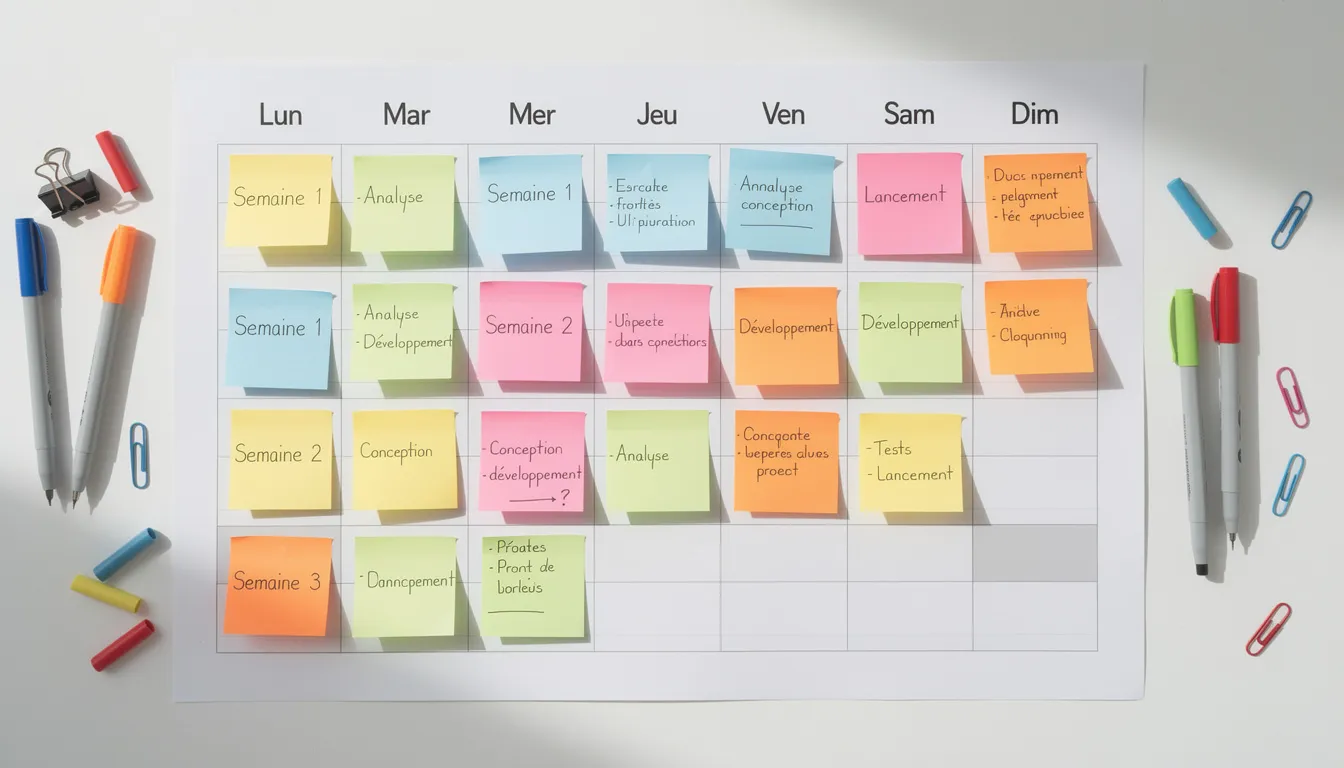
Example of a standard schedule for a 6-week CSR challenge
Here is a typical sequence to structure your challenge. This schedule can be adapted according to your objectives and context.
Week 0 – Preparation & teaser
- Validation of objectives with the sponsor and the project team
- Platform setup (content, pathways, points rules)
- Creation of content: articles, videos, quizzes prepared in advance
- Launch of a teaser campaign: posters on sites, email from the CEO, intranet banner, short presentation video
- Call for local ambassadors to relay the information
Week 1 – General awareness
- Official launch of the challenge with a video message from the sponsor
- Distribution of cross-cutting educational content on sustainable development and the company’s CSR challenges
- First fun quiz with points to be won to encourage registration
- Set-up of each participant’s personal account with points tracking
Week 2 – Focus on sustainable mobility
- Series of daily micro-challenges (cycling, carpooling, walking)
- Stories from employees who already practice soft mobility
- Display board of kilometres travelled using soft modes, by site
- Highlighting of an external partner (mobility operator, cycling association)
Week 3 – Focus on waste & responsible consumption
- “Zero plastic” challenge on sites with video tutorials
- Sharing before/after photos in the community space
- Team challenge between departments or countries
- Real-time score updates on the platform
Week 4 – Focus on responsible digital practices & inclusion
- Micro-trainings accessible in 5 minutes
- Knowledge validation quiz
- Concrete commitments: reduce emails, limit attachments
- Collection of improvement ideas via a form or “ideas” module
Week 5 – Consolidation & local rollout
- Workshops or webinars led by local ambassadors
- Showcasing successes by site and by team
- Space to propose sustainable commitments to be integrated into the CSR roadmap
- Motivation boost for the final stretch
Week 6 – Wrap‑up & looking ahead
- Sharing overall results: participation rate, actions carried out, quantified impacts
- Announcement of the winners (individuals and teams) with presentation of the CSR challenge trophies
- Collection of feedback to improve future editions
- Presentation of what comes next: integrating certain actions into processes, date of the next challenge
Thanks to a platform like Eli, this schedule is configured via an intuitive timeline builder. Automated campaigns (emails, push notifications, in‑app messages) are triggered according to the planned calendar, freeing up the project team for human‑led engagement.
Gamification & engagement: how to keep teams motivated over time
Gamification is not an end in itself but a powerful educational lever to maintain engagement over several weeks. Here are the mechanics that work.
Points mechanics
Points can be earned in multiple ways to value different types of contribution:
- Consuming content (articles, videos): 5 to 10 points
- Correct answer to a quiz: 15 to 20 points
- Completion of a validated concrete action: 20 to 50 points
- Participation in a workshop or webinar: 30 points
- Sponsoring a colleague: 25 points
- Submitting an idea for CSR improvement: 40 points
Motivating leaderboards
- Individual ranking for competitive spirits
- Team ranking to encourage mutual support
- Site or country ranking to create multi-site momentum
- Highlighting progress (strongest weekly improvement) so as not to discourage those who are behind
Weekly engagement formats
- Video messages from the sponsor reminding participants of the stakes
- “Friday challenge” with bonus points
- Series of stories or testimonials from “everyday heroes”
- Showcasing the most engaged teams in the internal newsletter
Rewards aligned with CSR
- Donations to charities chosen by the winning teams
- Budget for a local community project
- Shared equipment (company bikes, locker systems)
- Work time dedicated to volunteering
- Symbolic trophies and public recognition
Real-time steering
An engagement dashboard makes it possible to adjust communication if certain groups are less active. For example, if production sites or foreign subsidiaries participate less, targeted actions can be triggered: follow-up by SMS, increased on-site signage, involvement of frontline managers.
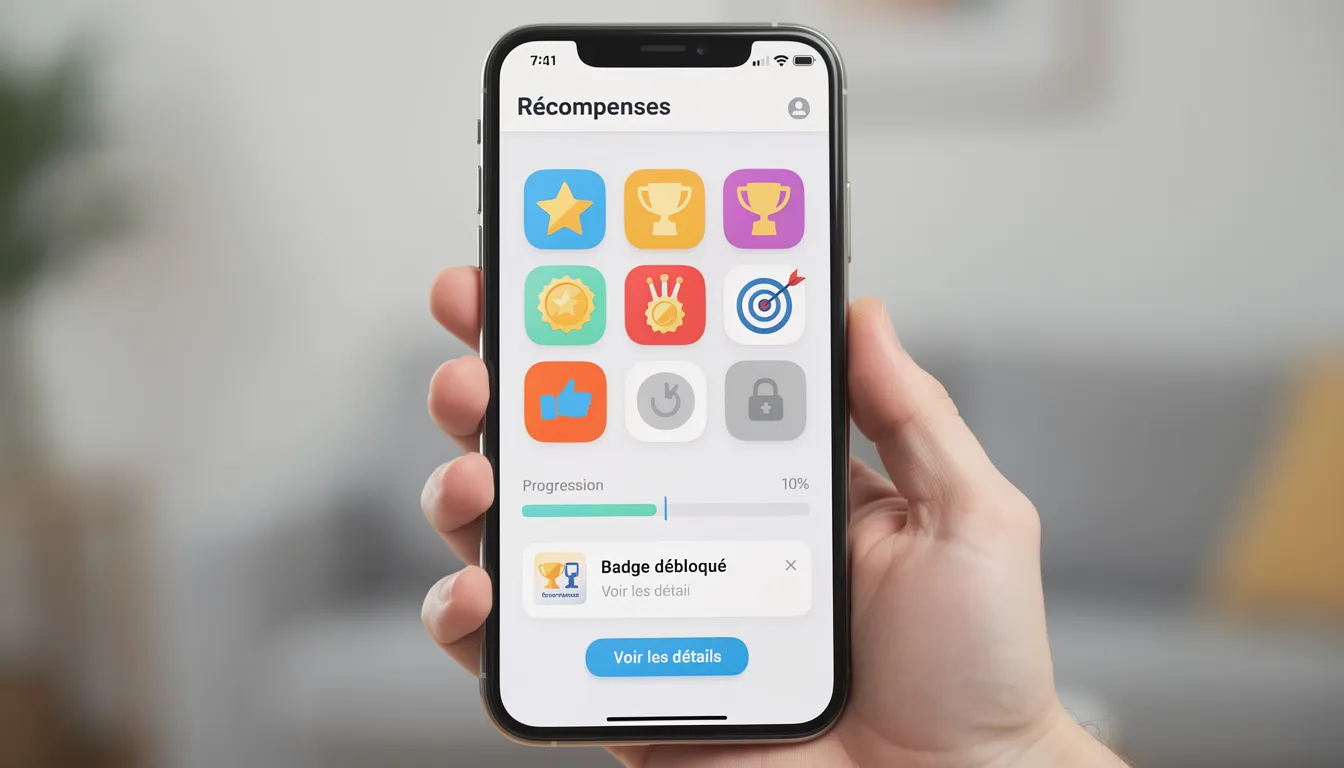
A solution like Eli makes it easy to activate these levers: custom badges, progressive levels, automated email journeys based on behaviour, targeted notifications by role or language, dynamic highlights on the mobile app.
Measuring and showcasing the impact of your CSR challenge
This chapter is your how-to guide for KPIs and reporting so you can brief the executive committee and feed into your CSR report.
Target indicators to aim for
- “70% of head-office employees logged in at least once”
- “5 CSR actions carried out on average per participant”
- “1.2 tonnes of CO₂ avoided on commuting journeys during the challenge”
- “200 hours of volunteering collected for partner associations”
- “Average score of 85% on awareness quizzes”
Multi-site consolidation
A global dashboard makes it possible to compare performance between sites and countries. In addition, a structured approach to measuring the impact of internal communication via KPIs strengthens the alignment between your CSR actions and your engagement campaigns. This data directly feeds:
- The non-financial report (CSRD compliance)
- Applications for labels (B Corp, ISO 14001)
- External communications (corporate website, social media, press releases)
Internal recognition
The results must be celebrated and shared:
- Presentation in a plenary meeting with an address from the sponsor
- Display on the intranet with simple infographics
- Video feedback from participants
- Dedicated newsletter with testimonials and key figures
How a CSR challenge platform facilitates multi-site deployment
For medium to large organisations, a specialised platform turns a complex project into a smooth rollout. Here’s how Eli addresses the challenges faced by CSR, HR and internal communication managers.
Content management
- Library of more than 200 ready-to-use pieces of content: articles, videos, quizzes, action sheets on CSR, QWL, mobility, inclusion
- Custom content editor to create your own materials
- Built-in AI to speed up the creation of content tailored to your context
- Organization by themes and progressive learning paths
Campaign management
- Timeline module to visually build the challenge schedule
- Weekly theme selection with drag-and-drop
- Automated sending scenarios (emails, push, in-app notifications)
- Time zone adaptation for international teams
Multi-site and multi-language dimension
- Targeting by country, site, department or job role
- Content available in multiple languages
- Consolidated global tracking despite diverse populations
- Performance comparison between sites to identify best practices to replicate
Measured participation
- Real-time dashboards: participation rate, views, clicks, actions completed
- Detailed segmentation to understand which groups are engaging or dropping off
- Report export for internal and external needs
Typical scenario
Imagine a company with 2,000 employees spread across several sites in France and Europe. It wants to roll out a “sobriety & solidarity” challenge over 6 weeks. With Eli, the project team:
- Set up the calendar in one day with the timeline builder
- Select relevant content from the library
- Adapt the key messages into 3 languages
- Launch the challenge with personalized automated emails
- Track engagement in real time and adjust the campaign
- Generate the final report in just a few clicks
Ready to take action?
- Try Eli for free on a pilot CSR challenge
- Request a personalized demo to prepare your next CSR challenge
FAQ – Frequently asked questions about CSR challenges in companies
How long should a CSR challenge last to be effective?
The ideal duration is generally between 3 and 8 weeks. That’s long enough to build new habits and create a real shift in behaviours, but not so long that participants lose interest.
A common and proven format is 4 to 6 weeks with 1 theme per week (mobility, waste, energy, inclusion, etc.). This pace keeps interest high with regular variety.
For a first edition, start with a 4‑week challenge on a limited scope – one country or one site – before considering a global rollout. This allows you to test the mechanics, identify necessary adjustments, and build an initial group of ambassadors for future editions.
Do you always need to offer rewards to motivate employees?
A recognition system is highly recommended, but rewards do not need to be expensive or material. The main thing is to value participation and make engagement enjoyable.
Examples of rewards aligned with CSR:
- Donations to charities chosen by the winning teams
- Time dedicated to a community project during working hours
- Highlighting teams in internal communications (newsletter, intranet)
- Symbolic trophies and public recognition at a closing event
Positive feedback, visibility given to contributions, and recognition from managers are often the most powerful motivation levers.
How can you engage employees who are not working at a computer?
Reaching frontline teams (production, stores, warehouses) requires suitable channels:
- Physical posters on sites with QR codes to access challenges on mobile
- Team briefings led by line managers
- CSR ambassadors appointed at each site to relay information and run activities locally
- Challenges adapted to operational constraints (less screen time, more field actions)
A platform accessible on smartphones such as Eli makes it easier for employees without a professional email address to take part. They can create an account with their phone number and participate from their personal mobile.
How can you adapt a CSR challenge for international teams?
The recommended approach: keep a common framework (objectives, KPIs, game mechanics) while adapting content to local realities.
Key points to watch:
- Offer key content in several languages (at minimum English + main local languages)
- Take local public holidays into account in the challenge calendar
- Adapt certain examples to cultural contexts (food, mobility, professional practices)
- Appoint local contacts empowered to suggest relevant variations
A multi-language, multi-site platform centralises management while leaving room for manoeuvre to local teams. KPIs remain comparable thanks to a shared framework.
What budget should you plan for an ESG challenge?
To frame your resources, start by defining the overall ESG budget to plan for your company in 2026, then allocate a portion specifically to challenges and engagement campaigns.
The budget depends on three main factors: scope (number of employees, number of countries), challenge duration, and the tools used.
A challenge can start with a limited budget:
- Project time from the ESG/HR/Communications team
- Existing internal communication channels (intranet, emails, posters)
- A few symbolic rewards (donations to charities, recognition)
To scale up and effectively reach large, dispersed audiences, a SaaS solution like Eli lets you spread the investment across several annual campaigns (ESG, quality of work life, safety, inclusion). The cost per challenge and per employee drops significantly from the second campaign onwards, while ensuring a professional level of quality and measurement.