CSR team building: engage your teams and measure the impact
Written by Tony Demeulemeester, Co-founder & COO @ Eli
March 9, 2026 · Updated October 1, 2026 · 15 min read
Ready to engage your teams?
Create custom challenges that connect employees to your mission and drive real behavioral change.
Regulatory pressure is intensifying. By the end of 2026, the CSRD directive will require large European companies to produce detailed non-financial reporting, while 70 to 80% of talents born after 1990 reject employers without a credible sustainability commitment. In this context, CSR team building is becoming a key strategic lever to align team cohesion with corporate social responsibility.
Key takeaways
Before diving into the details, here’s what you should remember from this article:
- A CSR team building activity combines the fun dimension of traditional team building with concrete actions in favour of the environment, social issues and employee well-being, generating measurable results such as kilograms of waste collected or hours of volunteering.
- These events deliver their full impact when they are part of an overall CSR strategy and a long-term commitment, rather than isolated actions.
- The Eli platform makes it possible to prepare, run and measure each CSR team building event thanks to its registration features, educational content, quizzes, surveys and real-time reporting.
- A successful CSR team building between 2024 and 2026 must be fun, useful, traceable and aligned with the company’s values to avoid any risk of greenwashing.
What is a CSR team building event?
The context has changed profoundly in recent years. The 2019 Pacte Law requires companies to take their social and environmental impacts into account, while the CSRD directive reinforces this requirement with detailed reporting expected by 2026. Employees, particularly generations born after 1990, now expect their employer to demonstrate concrete commitment to sustainable development, embodied by clear and aligned company values.
CSR team building represents the fusion of traditional cohesion activities with social responsibility initiatives. In practice, these are activities designed to strengthen bonds within a team while generating tangible and measurable social, environmental or societal impacts.
The difference with traditional team building is fundamental. Whereas a karting or laser tag session focuses solely on entertainment and competition, CSR variants emphasise quantifiable contributions: kilograms of waste collected, hours of volunteering completed, trees planted or people supported.
Concrete examples:
- Zero-waste workshop in Lyon: audit of office bins, DIY natural cosmetics workshops, one-month waste reduction challenge
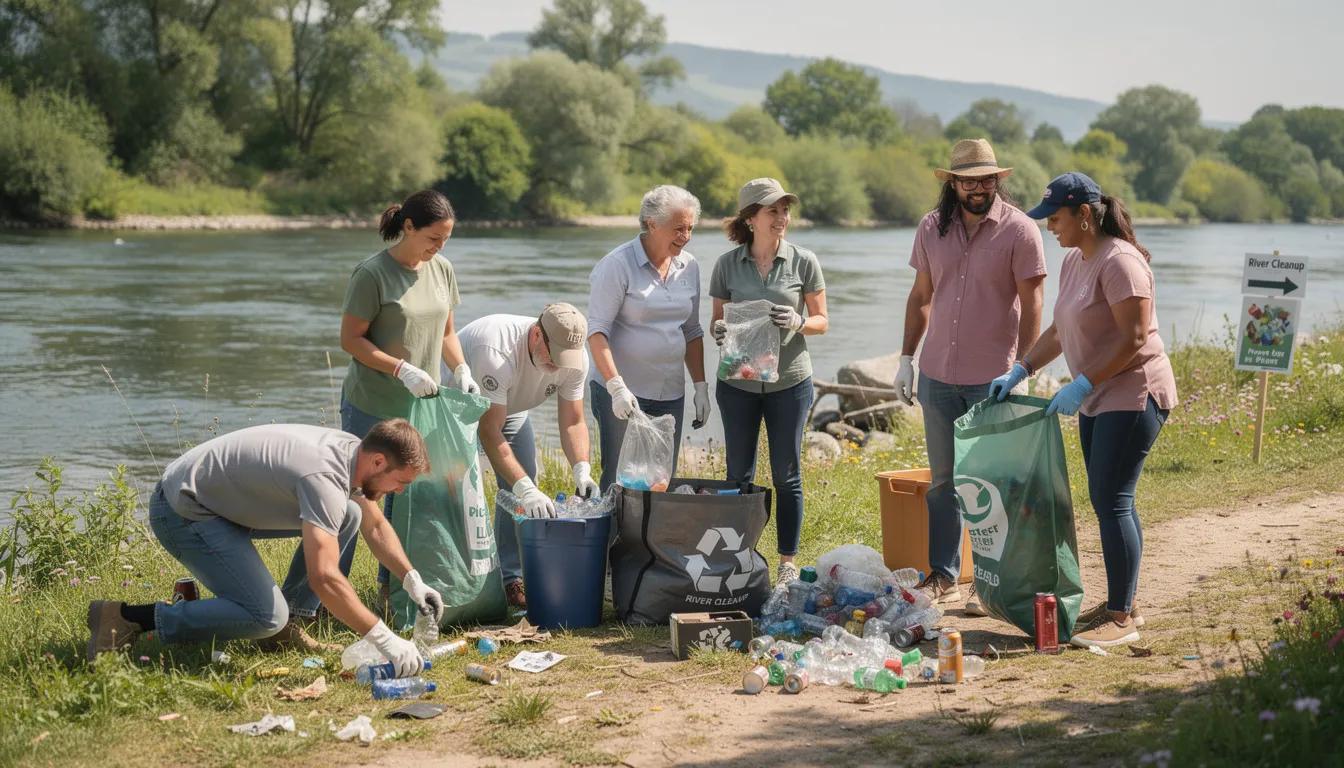
- Cleanup along the banks of the Garonne in Toulouse: cleaning natural areas with weighing of collected waste
- Inclusion day in Lille: parasport workshops, awareness-raising on stereotypes, diversity quiz
The three CSR pillars in team buildingCSR team building is structured around three major essential pillars. The first is the environment, with activities such as litter picking, reforestation, energy audits or promoting biodiversity. The second pillar concerns the social dimension, including actions for disability inclusion, outreach to the homeless, support for professional integration or the promotion of gender equality. Finally, the third pillar is governance, which encompasses ethical leadership, transparency and stakeholder engagement. These three areas help structure actions and ensure a concrete and lasting impact during CSR team building initiatives.
Why organize a CSR team building event? Benefits for the company and the teams
The benefits of a CSR team building event go far beyond a simple moment of conviviality. It is an investment that impacts employer attractiveness, talent retention, employee engagement and alignment with the company’s purpose, in the same way as choosing seminar activities to create team building. Recent studies confirm that organizations that regularly carry out these activities see a 12 to 18% decrease in voluntary departures.
Impact on team cohesion
These events break down silos by encouraging cross-department collaboration around a meaningful common goal. Unlike traditional activities, they reveal hidden talents such as empathy, ethical leadership or creativity in informal settings and are part of best practices for team cohesion in the workplace. Participants report post-event team satisfaction scores that are 15 to 25% higher than with traditional formats.
Impact on employee engagement
Shifting from being a passive recipient of CSR communication to an active contributor transforms the relationship to work. Employees become actors in the strategy rather than mere recipients of internal messages. Studies from 2023 link this type of engagement to increases of 10 to 20% in eNPS (Employee Net Promoter Score) results.
Benefits for the employer brand
Each CSR team building event generates authentic content: photos on LinkedIn, testimonials on the careers site, and figures for the CSR report. A 2024 Novethic barometer indicates that 65% of French job seekers factor CSR into their choices. Your organization gains visibility among talent whose values align with its own.
The importance of measurement
Without precise indicators, it’s impossible to demonstrate real impact. It’s essential to track participation rate (target: 80–90%), satisfaction (NPS > 70), intention to recommend the company, and specific CSR KPIs. A tool like Eli makes it possible to centralise this data and link it to strategic objectives.
Key figures (Deloitte study 2023–2024)
- +15% productivity for companies measuring CSR engagement
- +22% financial performance
- -12 to 18% voluntary turnover with regular CSR team-building activities
Concrete examples of CSR team building (in-person and remote)
The current trend combines local, hybrid and digital activities to reach all groups: head office, branches, industrial sites and remote workers. Here is a selection of proven ideas from 2023 to 2025, adaptable to different contexts.
Example 1: “Zero waste at the office” day
Format: A one-day in-person event in Paris, Lyon or Toulouse
Agenda:
- Audit of office bins with weighing (can lead to reductions of 50 to 100 kg per site)
- DIY workshops to make natural cosmetics or household products
- Launch of a one-month team challenge with weekly monitoring
CSR pillar: Environment Target audience: Operational teams, all levels
Example 2: Solidarity Olympics
Format: Half-day to full day, in groups of 50 to 500 participants
Agenda :
- Para-sport workshops (wheelchair basketball, blind football)
- Interactive quiz on inclusion and stereotypes
- Fundraising drive for an association chosen by employees through a prior vote
CSR pillar : Social and inclusion Target audience : Managers and multi-site teams, events from 200 to 500 people totaling more than 100 hours of volunteering
Example 3: Hybrid Climate Mission
Format : In-person session + digital follow-up over several weeks
Agenda :
- Climate Fresk in person (3-hour collaborative game on climate change science, used by more than 1,000 French companies)
- Digital extension via Eli: quiz on mobility, food, and digital sobriety
- Validation of concrete actions (carpooling, reduction of carbon footprint by 0.5 to 1 ton of CO2 per team)
CSR pillar : Environment and awareness Target audience : All teams, particularly effective for geographically dispersed organizations

Example 4: Recycl’art & upcycling workshop
Format: Half-day on-site creative session
Agenda :
- Collection of the company’s waste (roll-up banners, cardboard, production offcuts)
- Creation of artworks or useful objects to decorate offices or shared spaces
- Exhibition of the creations with a collective vote
CSR pillar : Environment and eco-responsibility Target audience : Industrial sites, creative teams, repurposing of 200 to 500 kg of waste
Example 5: Solidarity team building with a local non-profit
Format : Full day in immersion
Possible options :
- Outreach rounds with a homeless support organization
- Renovation of a community/non-profit space (painting, layout)
- CV workshop and mock interviews for young people entering the job market
- Collection and sorting of donations (clothes, toys, IT equipment)
CSR pillar: Social and local engagement Target audience: All levels, measurable impact (50 to 100 CVs prepared, more than 1,000 items redistributed)
How do you design a CSR team building aligned with your CSR strategy?
A CSR team building event must not be a one-off disconnected from everything else. To generate real impact and avoid greenwashing, it has to be part of your overall CSR roadmap: materiality matrix, 2025–2030 objectives, Net Zero commitments or certification process.
Step 1: Start from the company’s CSR priorities
Identify your key commitments:
- 30% reduction in CO₂ emissions by 2030
- Disability policy and employment rate of people with disabilities
- Gender balance in management bodies
- Support for the local economy and communities
The choice of your CSR team building must directly serve one of these key issues.
Step 2: Define SMART objectives
For each event, set clear objectives:
- Here are the main objectives of a CSR team building, with concrete examples for each: raising participants’ awareness, for example through a quiz to build awareness of carbon footprint.
- Prompt employees to take action, for instance by having them sign behavioural commitments.
- Generate new ideas through a post-event forum designed to collect initiatives.
- Reinforce a key message, for example by launching a new soft-mobility policy.
Step 3: Choose a suitable format
Take into account the real constraints of your organization:
- Season: Spring and autumn for outdoor activities or in natural areas
- Budget: From €50 to €250 per person depending on your ambitions
- Accessibility: Venue suitable for everyone, easy transport
- CSR maturity: Low maturity calls for simple initiatives (litter picking), while advanced maturity allows for more complex challenges
Step 4: Involve employees upstream
Engagement increases by 80% when teams take part in choosing the theme or partner charity. Use surveys to:
- Vote on the type of activity
- Choose the beneficiary charity
- Suggest original ideas
Step 5: Structure internal communication
Before the event (weeks 1 to 4):
- Teaser emails and short videos
- Posts on the intranet with a countdown
- Push notifications via Eli to boost registrations
During the event:
- Live photos and videos
- Real-time challenges and quizzes
- Flash polls to gather feedback and feelings
After the event:
- Summary of results (trees planted, volunteer hours)
- Sharing testimonials and photos
- Launch of the follow-up / extension program
Typical timeline (6 to 8 weeks)Week 1–2: CSR assessment, choice of format, planning.Week 3–4: Team mobilisation, registrations via Eli, running surveys.Week 5–6: Preparation of educational content and intensive communication.Week 7: Event execution with real-time measurement.Week 8 and beyond: Digital extension, reporting and adjustments.
Integrate Eli to prepare, run, and measure your CSR team-building
Eli is an SaaS platform for engagement and internal communication designed for HR directors, CSR managers, and managers in charge of internal communication. It turns every CSR team-building into a measurable, long‑lasting engagement campaign.
Before the event
Eli makes preparation easier with:
- Event pages customised with registration modules
- Surveys to choose activities or the partner charity
- Library of educational content: articles, videos, CSR quizzes from a collection of more than 200 ready‑to‑use resources
- AI content editor to create tailored materials
During the event
The platform sets the pace for the day:
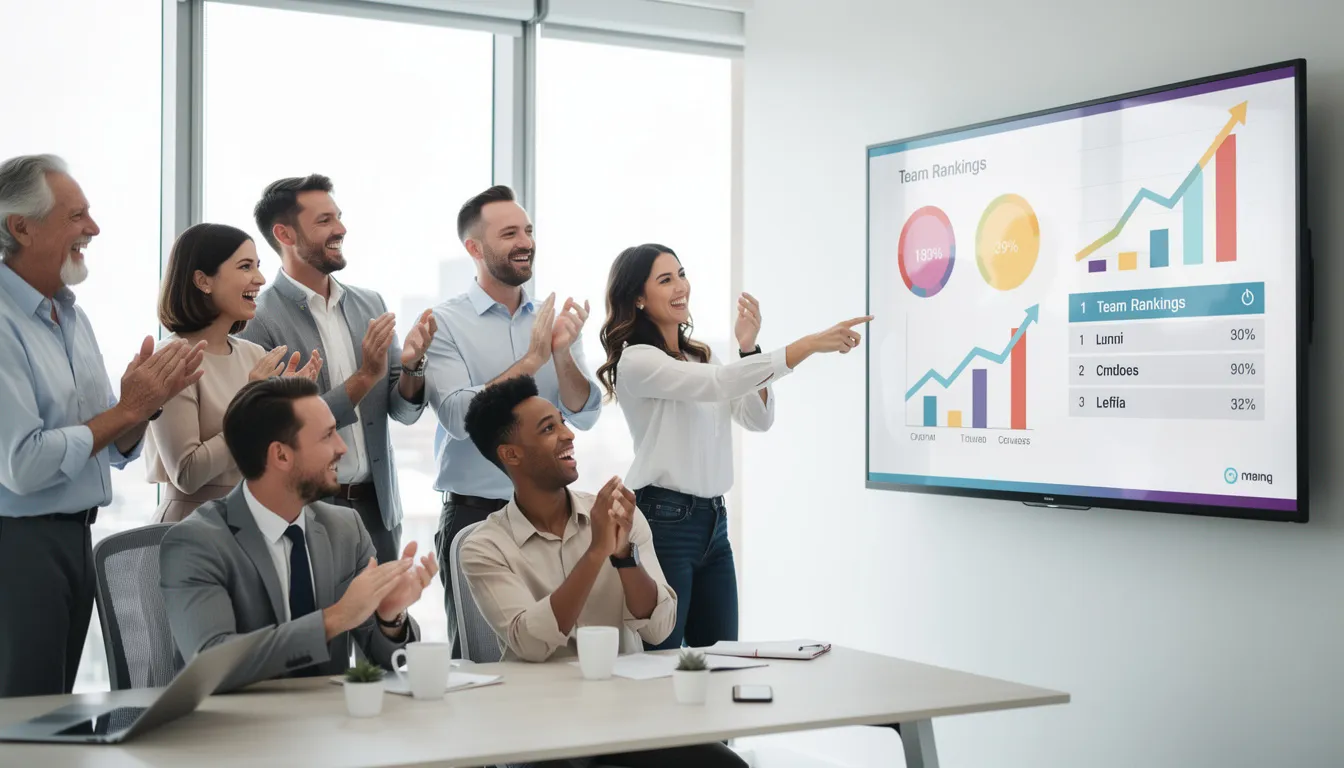
- Real-time challenges with team rankings
- Live quizzes to maintain attention and validate learning
- Flash polls to capture immediate feedback
- Push notifications to announce the different segments
After the event
Eli extends the impact beyond the team outing:
- Replays of key content for those who couldn’t attend
- Summary of results: total points, trees planted, kg of waste collected
- Photo/video gallery that can be shared internally
- Daily action program to maintain engagement over several weeks
Dashboards and reporting
Measurement is crucial for the credibility of your approach and relies on suitable corporate performance dashboards :
- Participation rate (target 90%)
- Content completion rate
- Engagement by department, site, or country
- Direct link with your CSR indicators (e.g.: 500 quizzes completed linked to 10% of mobility changes)
Ready to transform your next CSR team-building? Try it for free or Request a demo to discover how Eli supports your engagement strategy.
CSR activity ideas to run and extend with Eli
The value of a tool like Eli lies in its ability to extend engagement well beyond the team-building day, over several weeks or even several months. Here’s how to turn a one-off action into an ongoing dynamic.
“30 days to act” program
Roll out a mini-series of CSR content with one short action per day:
- Recycling and waste reduction
- Digital eco-actions (inbox clean-up, energy sobriety)
- Sustainable mobility (carpooling, cycling, public transport)
- Inclusion initiatives and wellbeing at work
This format generally achieves 40 to 60% lasting participation according to feedback.
Idea 1: Weekly themed quizzes
Offer quizzes on:
- Individual carbon footprint (French average: 4 to 8 tons CO2/year)
- Diversity and inclusion
- Mental health and wellbeing at work, drawing on better-designed, more engaging QWL questionnaires
- Biodiversity and the protection of wildlife and plants (birds, insects, plants)
Add a team- or department-based ranking to stimulate a positive competitive spirit.
Idea 2: Internal photo and video challenges
Launch visual challenges hosted on the platform:
- Before/after on office waste reduction
- Transformation of eco-friendly workspaces
- Modes of transport used to come to work
- Creation of bird nesting boxes or insect hotels
Idea 3: CSR ambassador video capsules
Broadcast 2-minute videos highlighting:
- Employees engaged in the field
- Guides and shared best practices
- Testimonials of concrete impact (such as those from La Fabrique des Castors or other partner associations)
Idea 4: Surveys for upcoming solidarity actions
Involve teams in choosing future initiatives:
- Volunteer day with a local association
- Donating vacation days to support a caregiving colleague
- Collection of refurbished IT equipment
- Partnership with organisations such as La Fabrique des Castors for actions in favour of living beings and ecosystems
Each team-building activity can be linked to a mini digital campaign on Eli, with tracking indicators that let you visualise how engagement evolves over time.
CSR team-building FAQ
What budget should you plan for a CSR team-building event?
In France, the typical ranges for 2024–2026 go from €50 to €250 per person depending on several factors, to be included in an overall CSR budget for the company:
Type of activity: DIY or litter-picking walks
Indicative budget: €20–80
Characteristics: Internal facilitation with light logistics
Type of activity: Workshops with speakers
Indicative budget: €80–150
Characteristics: External experts involved, materials provided
Type of activity: Residential CSR seminar
Indicative budget: €150–300
Characteristics: Organised in hotels, significant logistics, relaxation time included
Tip: allocate 10 to 20% of the budget to follow-up and impact measurement via a platform like Eli rather than investing everything in the single day. This is what will allow you to prove the ROI and avoid the “flash in the pan” effect.
How long should a CSR team-building event ideally last?
Most effective formats last between half a day and two days depending on the objectives and the size of the group. However, feedback shows the value of short but regular formats:
- 2 to 3 hours of activities, several times a year
- Complemented by digital campaigns on Eli between each in-person meeting
- Coverage of 70 to 80% of employees thanks to the in-person/digital mix
Systematically include a debrief and a moment to plan concrete actions to be taken after the event.
How can you avoid greenwashing in an ESG team-building event?
The risk is real: 40% of initiatives fail to be validated without rigorous follow-up, according to IFOP 2024 surveys. To avoid this:
- Choose activities that are consistent with your sector (digital sobriety for an IT services company, soft mobility for a sales fleet, responsible production for industry)
- Work with recognized partners: local associations, certified NGOs, players such as “la fabrique des castors” specialized in protecting ecosystems
- Communicate transparently: real figures, identified limits, areas for improvement
- Link the event to concrete commitments monitored over time through campaigns and indicators on Eli
How can you involve teams spread across multiple sites or countries?
A hybrid format is key for multi-site organizations:
Locally: each site organizes an activity adapted to its context (cleaning nearby natural areas, solidarity workshops with associations in nearby towns)
Globally: a shared digital challenge hosted via Eli brings everyone together:
- Inter-site rankings
- Shared quizzes with a common storyline
- Localized content (languages, examples, associations)
- Consolidation of engagement indicators at group level
Eli makes it easy to manage multiple languages, target by site or country, and produce consolidated reports for stakeholders.
When is the best time of year to organize an CSR team-building event?
Timing has a strong impact on participation:
Best periods and benefits for organizing a CSR team-building event
In spring, between April and June, the weather is generally good and people feel a strong desire to reconnect with nature. It’s an ideal time to organize a CSR team-building event, especially during Sustainable Development Week, which provides a favorable context for engagement.
At the beginning of autumn, in September and October, the energy of the new working year and the high motivation of teams help make events successful. It’s also when the European Week for Waste Reduction takes place, a perfect opportunity to raise awareness around this topic.
At the end of the year, in November and December, the spirit of solidarity is particularly strong, which is conducive to CSR team-building activities. This period coincides with events such as the International Day of Persons with Disabilities or Christmas collections, which can provide a framework for meaningful initiatives.
Scheduling your CSR team-building events around these key moments can boost participation by 25% according to observed feedback. The main thing is to ensure regularity throughout the year rather than relying on a single annual event.
Scheduling your CSR team-building events around these key moments can boost participation by 25% according to observed feedback. The main thing is to ensure regularity throughout the year rather than relying on a single annual event.
CSR team building is no longer an option but a strategic necessity for companies that want to attract and retain talent while demonstrating a credible CSR commitment, in addition to innovative initiatives to combine business and sustainable development. By combining high-impact activities with a measurement and follow-up tool like Eli, you turn every event into a lever for lasting engagement.
Ready to take action? Request a demo of Eli and discover how to design, run, and measure your next CSR team-building events.