Eco-friendly team building: a complete guide to an environmentally responsible event that strengthens team cohesion
Written by Tony Demeulemeester, Co-founder & COO @ Eli
May 13, 2026 · Updated October 1, 2026 · 8 min read
Ready to engage your teams?
Create custom challenges that connect employees to your mission and drive real behavioral change.
Eco-friendly team-building activities are becoming increasingly popular, as they strengthen bonds between colleagues while addressing environmental topics. In 2026, 78% of French companies with more than 500 employees now include these formats in their annual calendar. This guide will help you organize a memorable and responsible event.
Key takeaways
- An eco-friendly team-building event helps strengthen team cohesion while taking concrete action for sustainable development and corporate social responsibility.
- These activities take many forms: zero-waste workshops, nature workcamps in the Paris region, CSR treasure hunts, or connected challenges.
- The benefits include employee well-being, collective engagement, and an enhanced CSR image without a moralizing approach.
- This article provides concrete ideas, practical tips, and a full FAQ to help you organize your event as early as 2026.
What is an eco-friendly team-building event and why adopt it in 2026?
Team-building activities, which involve sharing an activity with colleagues outside the workplace, are increasingly valued by companies to strengthen bonds between members of the same team. The eco-responsible version incorporates sustainable practices: zero waste, sustainable mobility, biodiversity protection, and solidarity.
These events address current sustainable development challenges, including the 2030 goals and talent expectations (85% of millennials prioritize employer sustainability according to Deloitte 2025). Eco-friendly team-building activities allow participants to learn about environmental issues while having fun, thereby promoting better assimilation of CSR team-building practices.
The notion of meaning is central: each activity strengthens cohesion while generating a concrete positive impact—donation to a charity, tree planting, or carbon footprint reduction.
The benefits of an eco-responsible team-building event for your company
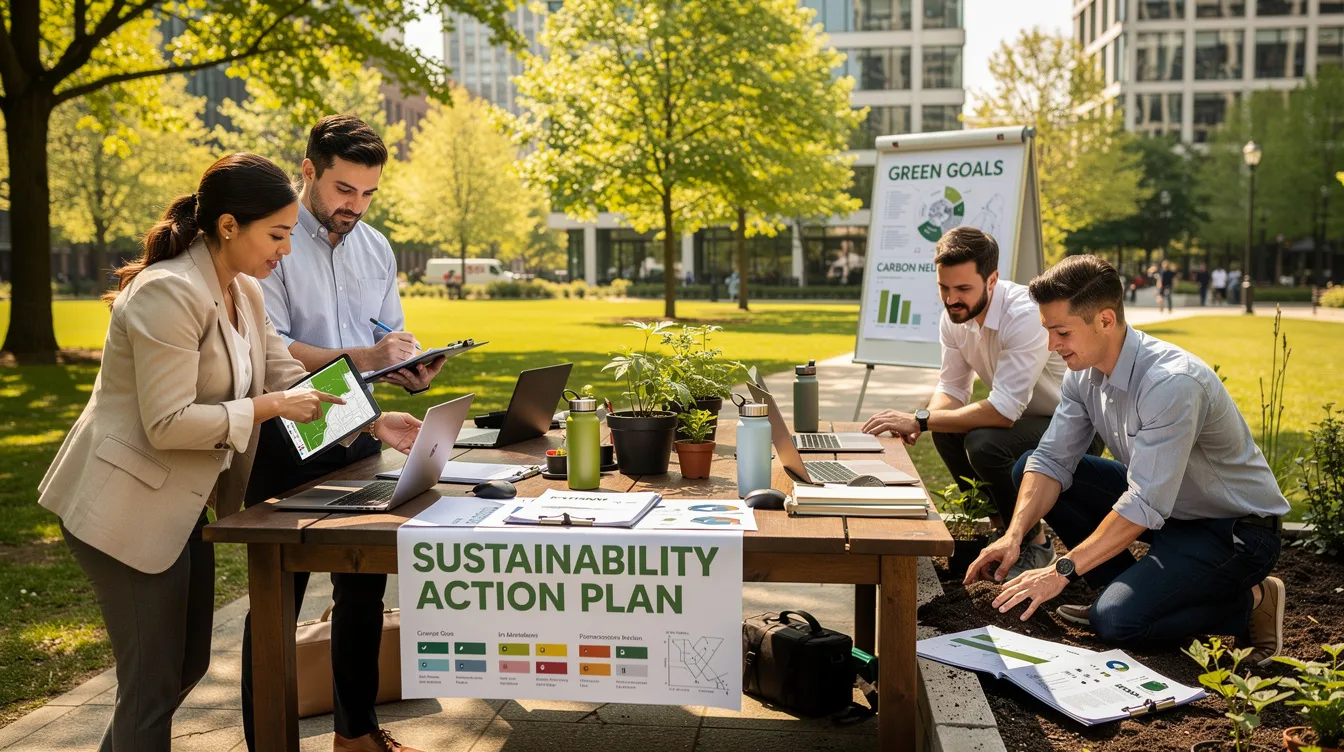
CSR-focused team-building activities allow participants to think while having fun, take on challenges together, and act for environmental causes. Here are the main benefits:
CSR-oriented team-building activities allow participants to think while having fun, take on challenges together, and act for environmental causes. Here are the main concrete benefits:
- Cohesion: these activities foster collective intelligence, break down hierarchical barriers, and strengthen team spirit.
- Well-being: they help reduce stress—with a measured 21% drop in cortisol according to Harvard Business Review—and improve employees’ mental health.
- CSR culture: they make it easier to turn social and environmental responsibility values into concrete everyday actions.
- Employer brand: they increase attractiveness for young talent, support employee retention, and strengthen team cohesion and alignment with clients and partners.
In addition, taking part in team-building activities that have a positive impact on the environment can strengthen individual interest in eco-friendly practices and foster team cohesion. These formats are flexible: from 5 to over 300 people, in-person, hybrid, or 100% digital.
Concrete examples of eco-friendly team-building activities to organize in 2026
Taking part in environment-focused team-building activities allows employees to get actively involved in positive-impact actions. Activities such as making terrariums, discovering edible wild plants, or taking part in a biodiversity rally are examples of initiatives that strengthen individual interest in eco-friendly practices.
Team-building activities that incorporate environmental awareness elements, such as making terrariums or biodiversity rallies, promote learning while remaining fun.
Anti-waste cooking workshop and seasonal menu
The zero-waste cooking workshop offers seasonal vegetarian recipes that make use of peels and scraps (broccoli stem pesto, peel chips). The group splits into kitchen brigades for a creative challenge followed by a shared tasting.
Awareness of the carbon footprint of food is built in: a vegetarian meal halves average emissions (2 kg CO2). Optionally, part of the meal can be donated to a local charity such as the Restos du Cœur.
Solidarity clean walk and zero-waste challenges
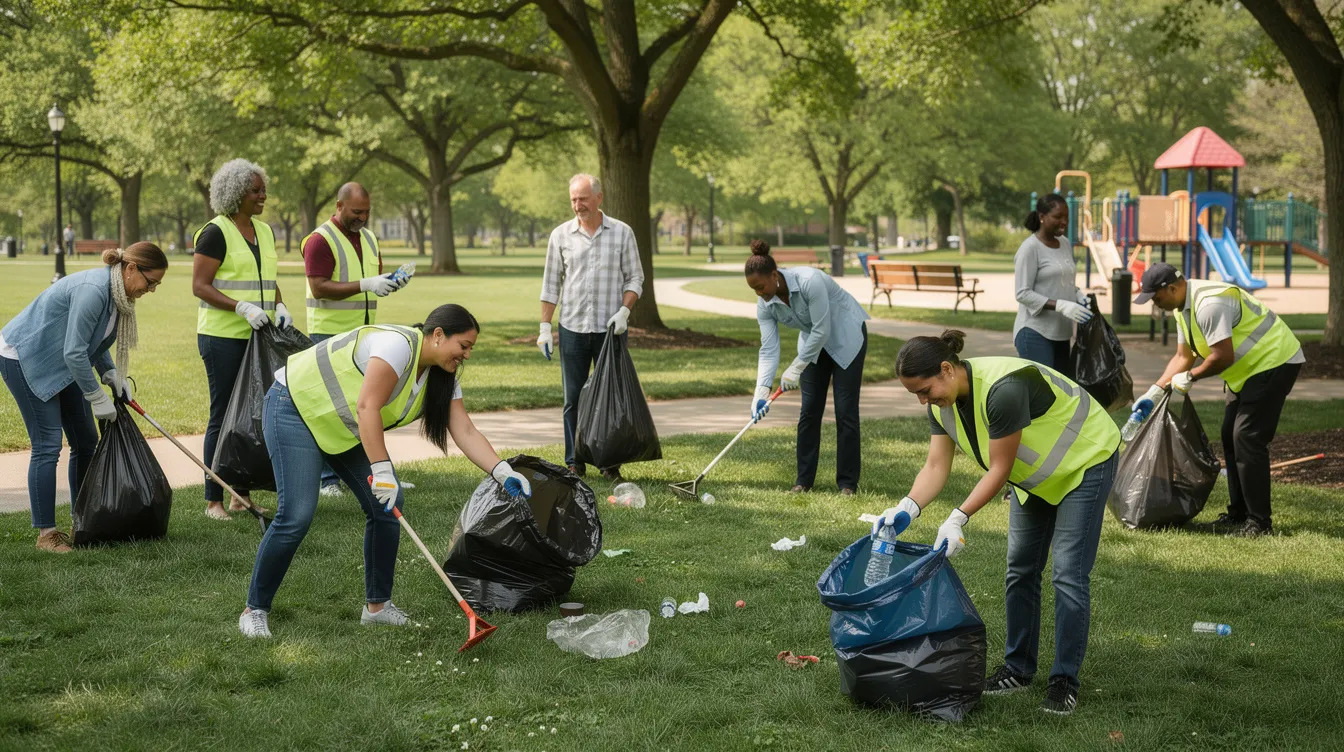
Clean Walk, which involves cleaning up a natural or urban area, is a simple and low-cost activity that provides a strong sense of collective satisfaction while having an immediate environmental impact. Teams equipped with gloves, grabbers and sorting bags clean up a park, a canal or a neighborhood near the office.
Practical organization:
- Municipal permits and associative partners
- Safety and equipment provided
- Weighing of collected waste (average: 50 kg per team)
Eco-friendly team-building events can include complementary challenges: structured internal corporate challenges, disposable cup–free day, reusable lunch box contest, plastic-free office for a month.
Nature immersion and participatory projects in Île-de-France
A typical day at a natural site includes: welcome coffee, awareness session on biodiversity, and a planting or hedgerow restoration project. Available locations include the banks of the Seine, the Meudon woods via the League for the Protection of Birds, the green roofs of Aubervilliers, or educational farms in the outer suburbs.
Activities such as making terrariums or discovering edible wild plants allow participants to explore local fauna and flora. These projects combine manual work, discovery of living ecosystems and strengthening of group cohesion. The CSR impact is measurable: number of trees planted, square meters of ecosystems restored for the non-financial report, based on CSR KPIs tailored to the company’s challenges.
Collaborative games and climate-related serious games
Environmental awareness workshops, such as those based on IPCC reports, are designed to make climate issues more concrete and accessible to participants. The sustainable development escape game offers puzzles on energy, mobility and waste, with a 75% knowledge retention rate.
These activities are suitable for large teams and hybrid formats. A structured debrief turns insights into an internal action plan, combining fun with collective decision-making.
Soft mobility and cycling challenge
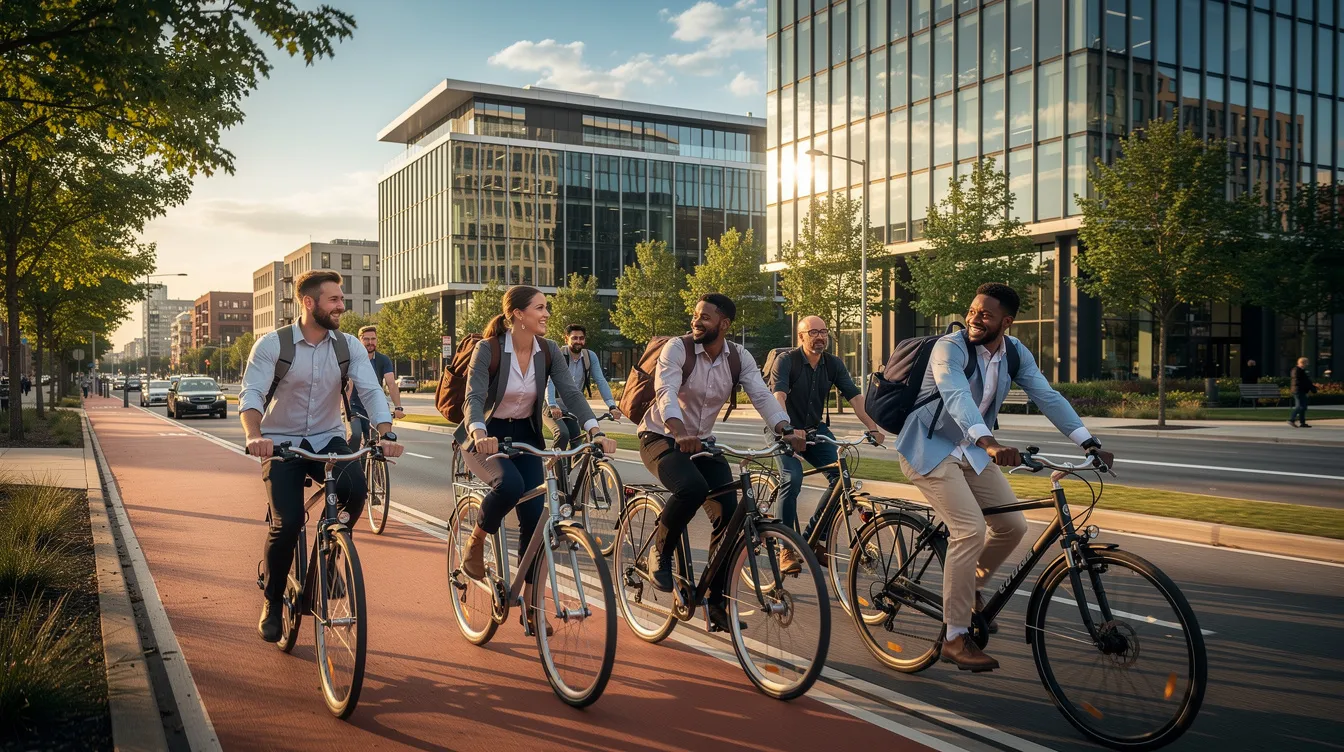
This multi-week challenge tracks kilometers traveled by bike, on foot, or by public transport via an app like Geovelo, and can be integrated into seminar activities focused on team building. Result: up to 2 tons of CO2 avoided for 100 participants.
Create cross-department teams with leaderboards and eco-friendly rewards (impact gift cards, donations). A friendly kick-off event—bike repair workshop, guided urban ride in a city like Paris—sparks collective momentum and lasting engagement.
Eli: an innovative solution for eco-friendly team building
Eli is an agency specialized in eco-friendly team building in the Île-de-France region, offering tailor-made campaigns that combine team cohesion and environmental commitment. Thanks to its expertise and its Eli employee engagement platform, Eli organizes campaigns that raise participants’ awareness of environmental issues while fostering collaboration and well-being.
Eli supports companies in designing sustainable events, integrating them into broader CSR programs led by the company, while ensuring the overall environmental impact is minimized.
Why choose Eli?
- Local expertise in France with in-depth knowledge of regional ecosystems
- Personalized approach tailored to CSR objectives and the specific needs of each team
- Concrete commitment: tree planting, clean walks, measurable actions for non-financial reporting
Best for
Companies wishing to organize an eco-friendly team-building event with a partner capable of ensuring a positive environmental impact while strengthening team cohesion.
How do you choose the right format to strengthen team cohesion?
4-step method:
- Clarify the objectives: pure cohesion, awareness-raising, or solidarity action
- Define the framework: budget, timing, easily accessible venue
- Choose the level of engagement: seated workshop, dynamic game, or physical field project
- Plan ahead for follow-up: impact measurement and extension of commitments
Involve HR/CSR teams and a few employee ambassadors in the selection process, and if needed, rely on an employee engagement platform to manage these initiatives. Adapt to participant profiles: fitness levels, work habits (remote work, shift work), and onsite/remote mix. Combine short activities (2 hours) with immersive formats to create a year-round CSR journey.
Embedding sustainability at the heart of your internal events
Concrete levers for a coherent event are part of innovative initiatives that combine business and sustainable development:
- Venue accessible by public transport
- Mainly vegetarian catering with local providers
- Limiting physical goodies and printed materials
Measure and communicate the impact: CO2 avoided, waste collected, donations made. Extend the effect with an eco-actions charter, regular activities, and an internal CSR ambassadors group. These initiatives directly feed into CSRD indicators for the 2025–2026 reports.
Rewards, recognition and eco-friendly gift card
Choose low-carbon rewards: local experiences, cultural subscriptions, donations to causes chosen by the teams. An eco-friendly gift card helps support solidarity projects, fair-trade businesses or zero-waste brands.
These rewards extend the message of the team building by steering consumption towards sustainable alternatives. Use them as prizes for internal challenges (mobility, CSR idea contests) throughout the year to maintain people’s engagement.
FAQ – Everything you need to know to run a successful eco-friendly team building
How far in advance should you plan an eco-friendly team building event?
Plan 2 to 3 months ahead for a standard format, and 4 to 6 months for a large seminar in the Paris region. Some DIY workshops or digital serious games can be organised in just a few weeks. Lock in the date, venue and agency quickly, then fine-tune the programme afterwards.
Is an eco-friendly team building event more expensive than a traditional one?
Budgets are comparable. A clean walk or a cycling challenge often costs less than traditional activities (€10–20 per person vs €50+). The return on investment is measured in stronger engagement and an improved image—strategic issues for any organisation.
Are these team building activities suitable for remote teams?
Many hybrid formats exist: online serious games, connected challenges, DIY kits sent to people’s homes. Combine a shared digital activity with local micro-actions. Plan an interactive session to keep sharing and collaboration alive at a distance.
How can you make sure that the team-building event is truly eco-friendly?
Check overall consistency: choice of venue, transport, meals, materials, and partners. Ask providers specific questions: origin of the equipment, waste management, links with local authorities or associations. Share the real impacts with your teams in a transparent way.
How can you measure the impact on team cohesion?
Use anonymous before-and-after questionnaires to measure the sense of belonging and how CSR values are perceived. Track participation in subsequent initiatives and the number of volunteers for internal projects. A hot debrief, followed by a check-in a few weeks later, reveals the ideas and search for meaning generated by the experience.